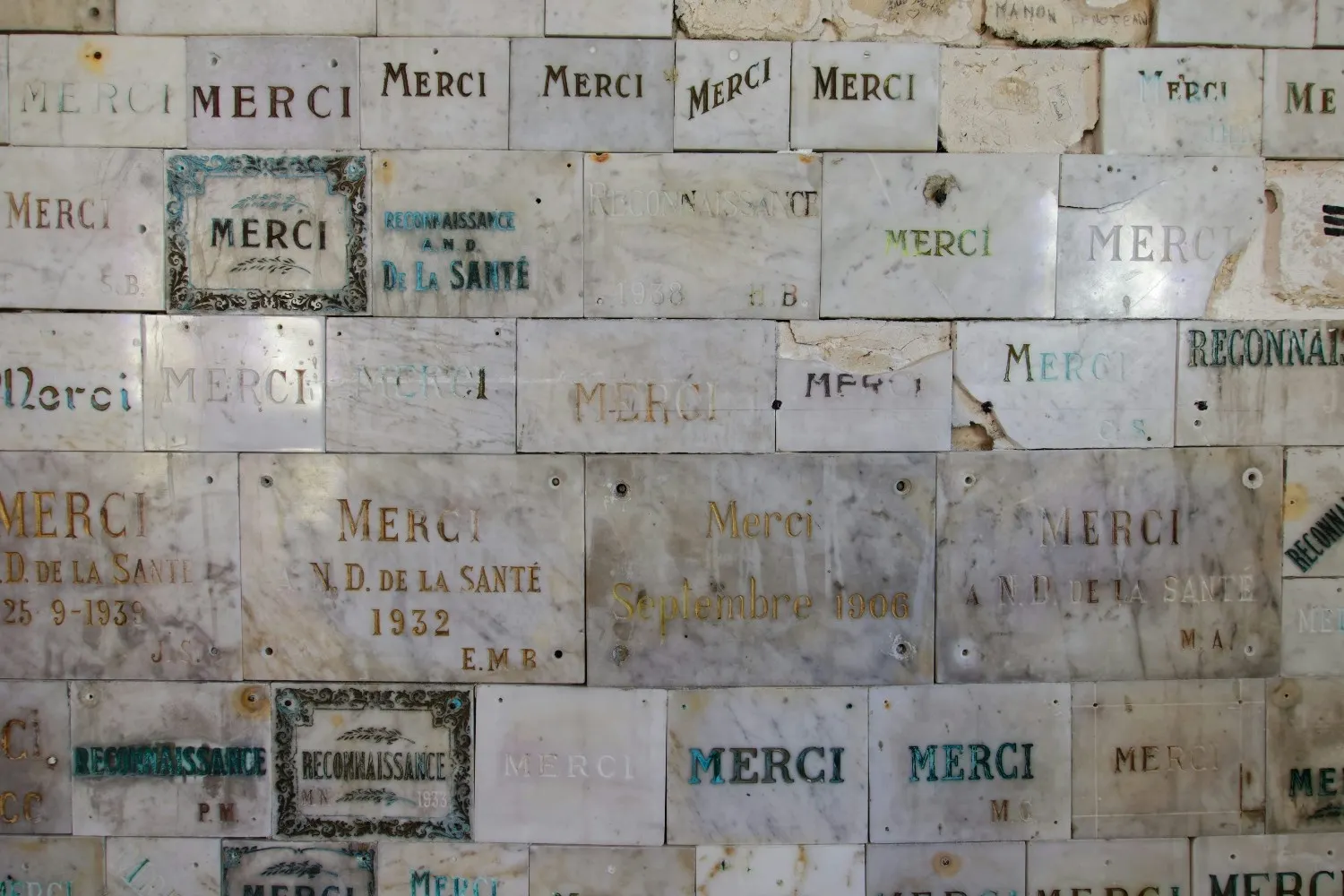
As most people will know, merci is the French word for ‘thank you’ – but there are many other ways to express your thanks or gratitude when speaking French.
If you’re learning French, one of the first words you’ll come across is merci, which simply means “thank you.”
While this word is appropriate in almost any situation, the French language offers many other ways to express gratitude depending on the setting, your relationship with the person, and how thankful you want to sound.
Don’t forget to use vous with strangers and in professional situations, and tu for more friendly interactions.
READ MORE: How to navigate the French ‘tu’ and ‘vous’ in everyday life
Here are some of the most common expressions.
Merci beaucoup (roughly pronounced mehr-see boh-koo)
This translates as ‘thank you very much’. It’s one of the most common ways to express stronger gratitude as you’re adding “a lot” to your merci. This puts an emphasis on your appreciation. It can be used for both casual and formal situations.
Example: Merci beaucoup pour votre aide. – Thank you very much for your help.
Be careful with the pronunciation of beaucoup – it should be ‘boh-koo’, not ‘bow-koo’. You might think that’s pedantic, but an incorrect pronunciation is perilously close to ‘beau cul‘, which means ‘nice arse/ass’.
Un grand merci (roughly pronounced uhn grahn mehr-see)
This one is similar to merci beaucoup, it translates literally to “a big thank you”. You might come across this phrase during speeches – it can be both formal and casual.
Example: Un grand merci à tous ceux qui sont présents ce soir. – A big thank you to all those present tonight.
Mille mercis (roughly pronounced meal mehr-see)
This one translates to “a thousand thank yous” – as you’ve probably guessed, this one is to express extreme gratitude and can be used with family, friends or in more informal contexts.
Be careful with the spelling: mille (a thousand) is invariable and is always written without an ‘s’, whereas merci takes a final ‘s’ in this situation.
A similar version is merci mille fois (thank you a thousand times), which means basically the same thing, similar to the English ‘thanks a million’.
Other heartfelt expressions that share the same sentiment: merci du fond du coeur (roughly pronounced mehr-see dew fohn dew kur), which translates to “thank you from the bottom of my heart”, and merci infiniment (roughly pronounced mehr-see an-fee-nee-mahn) which means “infinite thank yous”.
Je vous remercie (roughly pronounced zhuh voo ruh-mehr-see)
Other than just merci in French, you can also use the verb remercier (to thank). This one would translate as: “I want to thank you”. As the vous suggests, this one is more formal. You can use it with a ‘tu‘ for closer aquaintences, but it’s most commonly heard in more formal or work-related contexts.
Usually in French if you see the prefix ‘re’, it indicates that something is happening again (eg revenir – to return – or rebonjour which means ‘hello again). But remercie is the exception, and you can use this for a first thank-you.
When you want to express your thanks more emphatically, you can also use je ne sais pas comment vous remercier, which means “I don’t know how to thank you”.
Example: Il ne fallait vraiment pas vous déplacer pour moi, je ne sais pas comment vous remercier. – You really didn’t have to go out of your way for me, I don’t know how to thank you.
C’est très aimable (roughly pronounced say treh eh-mah-bluh)
This phrase doesn’t actually include the word merci but it is useful for expressing gratitude. You would use this to thank someone who has helped you with something, or offered their help without your asking them.
Example: C’est très aimable de votre part d’être venu me rendre visite à l’hôpital. – It’s really nice of you to have come and visited me at the hospital.
Je vous suis très reconnaissant(e) (roughly pronounced zhuh voo swee treh ruh-koh-neh-SAHN (masculine) / zhuh voo swee treh ruh-koh-neh-SAHNT (feminine))
To express gratitude in French, you can use the adjective reconnaissant. Don’t forget to add the -e at the end for a woman. This phrase translates as “I am grateful to you”.
Example: Je suis très reconnaissante pour tout ce que tu as fait pour moi. – I am very grateful for everything you’ve done for me.
The very formal phrase toute ma gratitude (roughly pronounced toot-mah gra-ti-tud) is quite rare to hear in everyday language, but you might encounter it in writing or in a speech.
Example: Je voudrais exprimer toute ma gratitude envers mon mentor, sans qui cet événement n’aurait pas eu lieu. – I would like to express my deepest gratitude to my mentor, without whom this event would not have taken place.
T’es un amour (roughly pronounced teh-uhn ah-moor)
This one translates to “you’re a sweetheart”. This is definitely something you say to your friends and family. In the same vein, there’s also t’es un ange (roughly pronounced teh uhn anzh) – you’re an angel.
Example: Merci de m’avoir aidé avec mon déménagement. T’es un amour ! – Thanks for helping me move. You’re too kind.
READ ALSO: Beyond désolé – 7 ways to say ‘I’m sorry’ in French