When the tide retreats along France’s coastline, you might see families or seafood enthusiasts head into the rocks and shoreline with buckets, nets, and rakes in search of different treasures.
This practice is called pêche à pied, or shore fishing in the hope of finding clams, cockles, mussels, oysters, crabs, or shrimp.
But while it is free and accessible to everyone, it is also carefully regulated to protect marine ecosystems and ensure shellfish remain safe to eat.
Unlike fishing from a boat, it requires nothing more than suitable footwear, simple hand tools, and a good understanding of the tides.
It is particularly popular during spring tides (grandes marées), when the sea retreats the furthest, exposing vast areas of sand, and rocky areas where marine life can usually be found.
Where can you go shore fishing?
France has hundreds of kilometres of coastline where recreational shore fishing is permitted, including: Brittany (Finistère, Morbihan, Côtes-d’Armor, Ille-et-Vilaine), Normandy (Manche and Calvados), Vendée, Charente-Maritime, parts of the Atlantic coast and selected areas of the Mediterranean coast.
However, not every beach is open for shellfish gathering. It’s important to check local regulations before setting out, like potential signs posted at the entrance of beaches.
The rules everyone must follow
Respect minimum sizes – Every species has a legal minimum size. Small shellfish and crustaceans must be returned immediately so they can continue growing and reproducing.
Watch out for catch limits – Many species have daily bag limits. Recreational fishing is intended for personal consumption only and not for commercial sale.
Check closed seasons – Some species may be protected during breeding periods or temporarily prohibited due to environmental conditions.
Fish only in authorised areas – Certain beaches may be closed because of bacterial contamination, toxic algae, or conservation measures.
Use permitted tools – Simple hand tools such as small rakes, hooks, and hand nets are generally allowed, while more destructive equipment is prohibited.
These rules can vary between departments and even individual beaches, making it essential to consult local notices before every outing.
Usually beaches where this are allowed have large notices outlining the rules and the limits, such as the below example from Vendée. 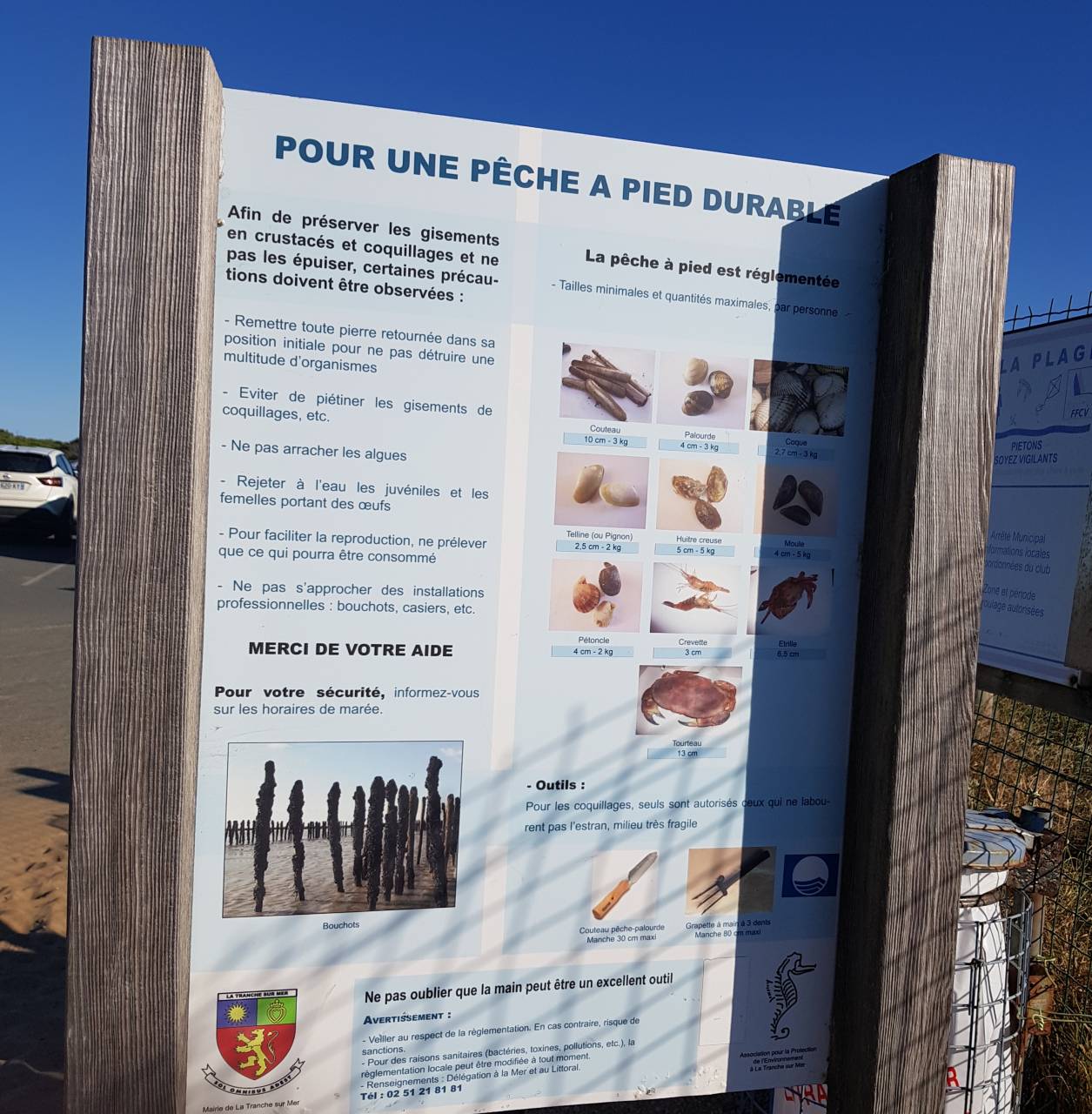
Noticeboard at a beach outlining the rules for shore fishing or foraging
If not, search online for the name of the beach and la pêche à pied, or head to the website of the local mairie, which outlines all the rules and any temporary bans or restrictions – here’s an example from Brittany.
Watch out for the tides
The greatest danger during a pêche à pied outing is often not the sea life – but the sea itself.
Check tide times before leaving, and make sure to leave the shore well before the incoming tide; it can definitely catch you off guard if you’re not used to how fast the sea goes up. Every year, emergency services rescue people trapped by rapidly rising tides after they venture too far from shore.
Make sure to always wear sturdy waterproof footwear, also useful to protect your feet if you’re fishing around the rocks.
Is it safe to eat what you fish?
Shellfish naturally filter seawater and can accumulate bacteria, viruses, or marine toxins if collected from contaminated waters.
Before harvesting shellfish, always check whether the area is open for recreational collection. Temporary health closures are common after heavy rainfall or algal blooms.
Shellfish must be eaten quickly and must remain alive until they are cooked. If you have any doubt, do not eat them (if they look, smell or appear to be bad).