
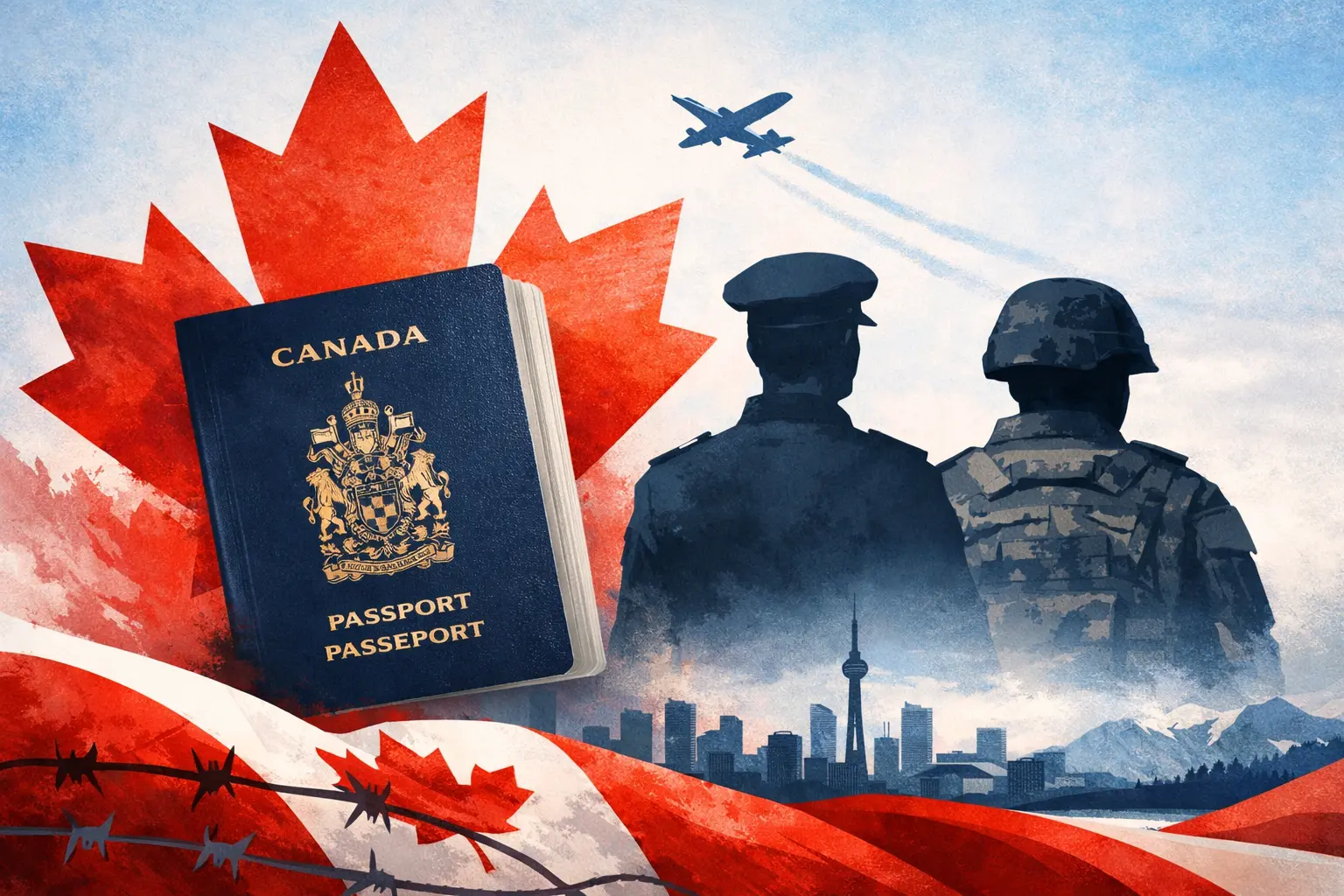
Canada updates Express Entry immigration rules 2026
When I checked Canada’s latest immigration update, one line jumped out fast: Canada now wants some skilled military recruits inside Express Entry, not just nurses and tradespeople. (Canada)
Yes. Canada revised Express Entry immigration rules for 2026 by adding new priority categories, including a skilled military recruits category tied to Canadian Armed Forces recruitment, plus added focus on transport roles, researchers, senior managers, and doctors with Canadian work experience. (Canada)
Key takeaways
- IRCC set out new 2026 priority groups inside Express Entry immigration rules. (Canada)
- A new skilled military recruits category targets foreign recruits with a Canadian Armed Forces job offer. (Canada)
- IRCC also added transport roles, and it named pilots and aircraft mechanics as examples. (Canada)
- A first doctor-focused round was described as coming “in the coming days.” (Canada)
- The usual Express Entry programs still sit under the system, and the 60-day clock after an invitation still applies. (Canada)
Why it matters (quick)
First, this affects people already in the Express Entry pool who match the new categories. Next, it also affects employers and the Canadian Armed Forces that recruit abroad. Also, it changes which skills can get faster attention inside Express Entry immigration rules, even when the pool is large. (Canada)
What changed in Express Entry immigration rules for 2026?
Canada changed Express Entry immigration rules by adding new category-based invitation groups for 2026, including skilled military recruits and transport occupations. (Canada)
First, IRCC published a news release dated February 18, 2026, naming the 2026 categories under Express Entry. (Canada)
Next, IRCC said the categories help Canada invite people with skills tied to labor gaps. (Canada)
Also, Reuters reported the changes come as Canada aims to keep immigration levels under tighter control while still filling key jobs. (Reuters)
Which new categories did IRCC add?
IRCC listed several additions in its news release. (Canada)
First, it highlighted a category for foreign medical doctors with Canadian work experience. (Canada)
Next, it added categories for researchers and senior managers with Canadian work experience. (Canada)
Also, IRCC added transport occupations, and it gave examples like pilots, aircraft mechanics, and inspectors. (Canada)
Finally, IRCC added skilled military recruits, aimed at foreign military applicants recruited by the Canadian Armed Forces for roles like doctors, nurses, and pilots. (Canada)
What stays the same inside the system?
Even with these updates, Express Entry still covers the Federal Skilled Worker Program, Federal Skilled Trades Program, and the Canadian Experience Class, plus part of the Provincial Nominee Program flow. (Canada)
Next, category rounds still sit beside other round types, like general rounds. (Canada)
Also, once a person gets an invitation to apply, IRCC still gives 60 days to submit the application. (Canada)
Timeline (dates I can confirm)
- Feb 18, 2026: IRCC posted the 2026 category announcement. (Canada)
- Feb 18, 2026: Minister Diab delivered speaking notes in Toronto that described the new categories, including the military one. (Canada)
- “Coming days” after Feb 18, 2026: IRCC said a first round for foreign medical doctors with Canadian work experience would happen soon. (Canada)
How the skilled military recruits category works
IRCC’s speech says skilled military recruits need a job offer from the Canadian Armed Forces to be invited under that category. (Canada)
When I read the speaking notes, I noticed one detail that many quick recaps skip: IRCC ties the category to Canadian Armed Forces hiring. (Canada)
Next, the speech says eligible recruits with a job offer from the Canadian Armed Forces can be invited to apply for permanent residence. (Canada)
Also, the same section says recruits face the same security checks and military requirements. (Canada)
So, this is not a “fast pass.” It is a category gate inside Express Entry immigration rules, with extra screening tied to service. (Canada)
Why add military roles now?
IRCC links this category to a wider government defense focus in both the speech and the news release. (Canada)
Meanwhile, Reuters reported Canada also discussed defense goals in the same week as the immigration update. (Reuters)
Still, the key point for applicants is simple: the category exists, it sits on the official category list, and it is called Skilled military recruits. (Canada)
Also, the category list is posted on Canada.ca, not on a social post or a “leak” page. (Canada)
Quick definition: category-based selection
Category-based selection is when IRCC invites people from the Express Entry pool who match a category set by the Minister. (Canada)
Next, IRCC ranks eligible people and then invites top-ranked profiles in that group. (Canada)
What applicants should do next
To act on Express Entry immigration rules, applicants should check the official category page, confirm their work history and codes, and watch for round instructions and dates. (Canada)
First, I would start with IRCC’s category-based selection page because it lists the current categories in one place, including skilled military recruits. (Canada)
Next, I would read the IRCC news release to see which groups IRCC called out for 2026, like transport occupations and the Canadian work experience groups. (Canada)
Also, if you are aiming for the military category, the speech adds a key filter: a Canadian Armed Forces job offer sits at the center of eligibility. (Canada)
Then, if you get an invitation to apply, remember the 60-day deadline for the application package. (Canada)
Action checklist (safe and simple)
- First, confirm you meet the base Express Entry rules and are in the pool. (Canada)
- Next, check the category list on Canada.ca and match your work history to the right category. (Canada)
- Also, watch IRCC round instructions, since each round sets its own rules for that draw. (Canada)
- Then, ignore any site that claims it knows the next cut-off score without citing IRCC. (Yes, that includes the guy on social media with the “trust me” font.)
- Finally, keep your documents ready so you can meet the 60-day window if invited. (Canada)
What we know
- IRCC posted the 2026 category list and named new groups, including skilled military recruits and transport occupations. (Canada)
- The IRCC speech says a Canadian Armed Forces job offer is part of the skilled military recruit path. (Canada)
- IRCC said a first doctor-focused round was coming in the days after Feb 18, 2026. (Canada)
What we do not know yet
- Exact future draw dates and score cutoffs for each new category (IRCC posts those per round). (Canada)
- How many invitations IRCC will issue in each new category over 2026 (IRCC reports yearly to Parliament, but per-round counts come as draws happen). (Canada)
What People asked Frequently:
1) Did Canada change Express Entry rules, or just the categories?
IRCC changed how it will prioritize invitations in 2026 by updating the category-based selection list. I did not see IRCC say it replaced Express Entry itself. Express Entry still runs the same main programs, but IRCC can target invitations by category.
2) What is “category-based selection” in one sentence?
It is when IRCC invites people from the Express Entry pool who match a category set by the Minister, to meet a stated economic goal.
3) Do I need Canadian work experience to benefit from these 2026 updates?
Some new categories explicitly say “with Canadian work experience,” like researchers and senior managers, and IRCC also highlighted doctors “with Canadian work experience.” Other categories, like transport occupations, are not described that way in the announcement text.
4) What exactly is the “skilled military recruits” category?
IRCC says it is for foreign military applicants recruited by the Canadian Armed Forces, and it named examples such as military doctors, nurses, and pilots. In the speaking notes, I saw IRCC tie this to having a job offer from the Canadian Armed Forces.
5) Does the military category mean I can apply without joining the Canadian Armed Forces?
I did not see IRCC present it as a civilian pathway. The public explanation links it to Canadian Armed Forces recruitment and a CAF job offer.
6) Which transport jobs did IRCC mention?
IRCC’s announcement specifically pointed to transport occupations and gave examples including pilots, aircraft mechanics, and inspectors.
7) When will the first draws happen under the new categories?
IRCC said a first round for foreign medical doctors with Canadian work experience would happen “in the coming days” after the Feb. 18, 2026 announcement. I did not see confirmed dates for other new categories in the same documents.
8) Will this change my CRS score or how CRS works?
I did not see IRCC say CRS scoring rules changed. What changed is which groups can be targeted for invitations through category-based selection.