
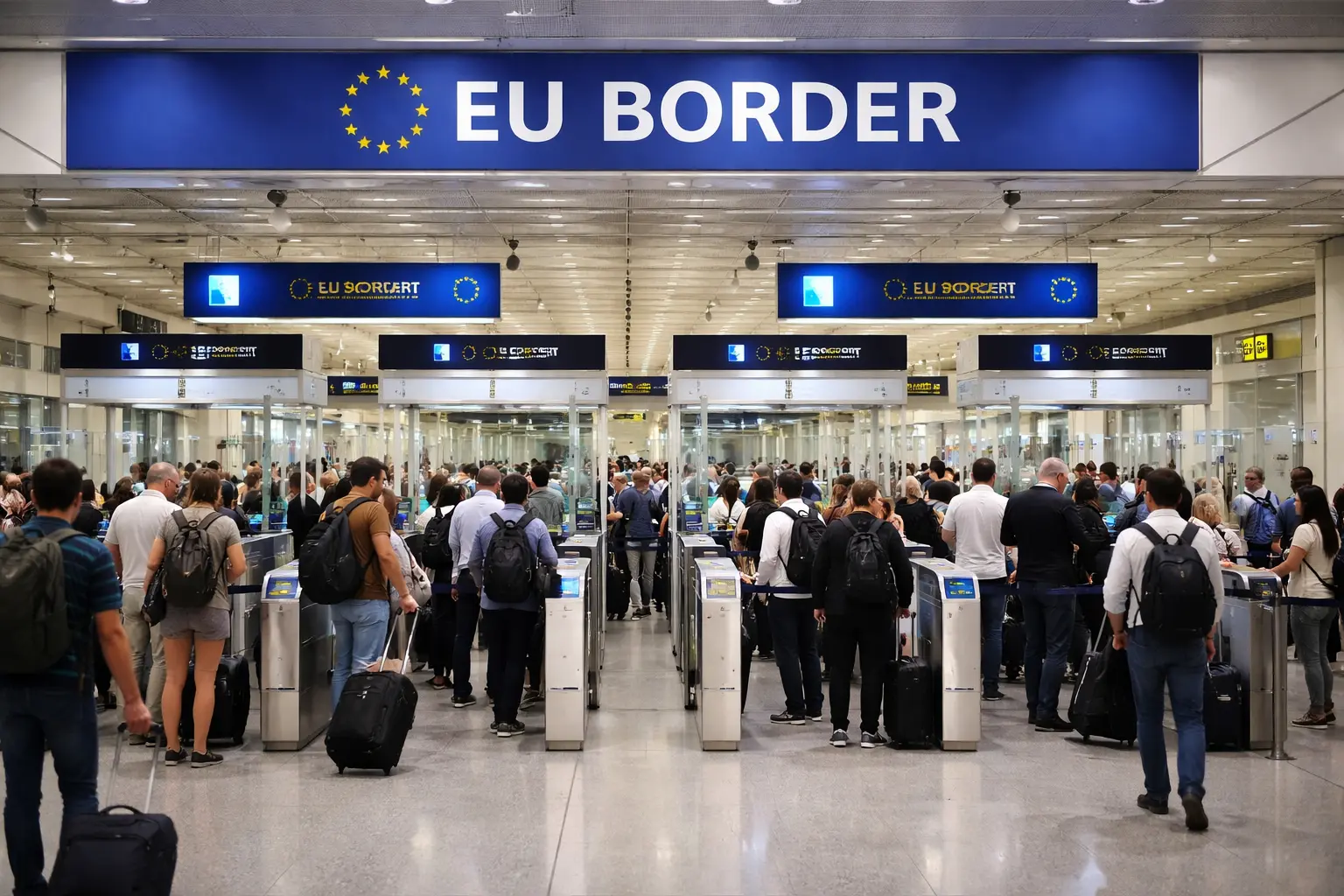
The EU Entry/Exit System is now expected to begin full implementation in September, following renewed concerns from several member states over airport readiness, particularly in France. EU officials acknowledged that infrastructure and staffing constraints at major international airports could disrupt border operations if the system were launched earlier.

What changed in the EU Entry/Exit System timeline
According to officials involved in the discussions, the revised target date reflects operational bottlenecks identified during final preparedness assessments. French authorities flagged capacity issues at major airports, prompting calls for additional time before activating the biometric checks required under the EU Entry/Exit System.
EU institutions have emphasized that the postponement is intended to ensure a coordinated rollout across the Schengen area rather than a fragmented or uneven launch.

Background and policy context
The EU Entry/Exit System is a large-scale border management project designed to digitally record the entry and exit of non-EU nationals traveling for short stays within the Schengen area. The system replaces manual passport stamping with biometric data collection, including facial images and fingerprints, and is intended to improve border security and compliance monitoring.
The project is overseen at the EU level by the European Commission and applies across the Schengen zone, which includes most EU member states as well as associated countries.
Why French airports raised concerns
French officials cited congestion risks at high-volume entry points, including Paris-area airports, where large numbers of travelers could face delays during the initial phase of biometric enrollment. Airports such as those serving Paris handle a significant share of long-haul arrivals from outside the EU, making them critical stress points for the new system.

France communicated these concerns through EU coordination channels, arguing that additional testing and staff training were necessary to avoid disruption once the system goes live.
Who is affected by the EU Entry/Exit System
The system applies to non-EU nationals entering the Schengen area for short stays, including tourists and business travelers. EU citizens are not subject to the biometric registration requirements under the Entry/Exit System.
Airports, ferry terminals, and land border crossings across the Schengen zone are also directly affected, as border authorities must integrate new hardware, software, and procedures into existing controls.
Official sources and statements
EU officials confirmed the revised rollout objective following consultations with member states. The European Union has previously stated that the system will only be activated once all participating countries confirm operational readiness.
France’s position was conveyed by national authorities responsible for border management, highlighting infrastructure constraints at major international airports.
Update note
The September timeline reflects the latest position communicated by EU officials at the time of reporting. The European Commission has indicated that the launch date remains dependent on final technical and operational assessments and could be adjusted if further issues emerge.