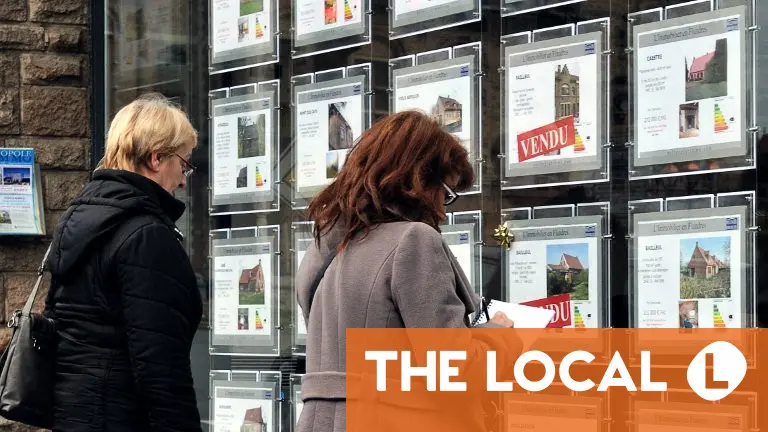

House-hunters in France are often surprised that French real estate agents don't seem to be very responsive to queries - experienced property purchaser Samantha David reveals the tips and tricks for dealing with French agents.
People searching for French property can be surprised by French estate agents. Why don't they answer their phones? Why don't they reply to email enquiries and phone messages? Why don't they have detailed floor plans? Why won't they tell you the location of a property? Why are they apparently trying to put you off buying a property? Why won't they even show you a property? Why are prices such a minefield? How much can you negotiate?
As is often the case, the answers lie within the differences of the French system.
First a note for Americans - role of real estate agent in France is completely different to that of a 'realtor' in the US, and house-hunters in France (and Europe more generally, in fact) are expected to do a lot more of the work themselves. Find a complete explanation of the differences, and how to find American-style realtors in France, here.
British, Irish and other European buyers will likely find the overall system similar to what they are used to - but with significant levels of differences in how responsive French agents are, and what services they routinely offer to buyers.
Types of agent
The first thing to understand is that not all estate agents are the same. An 'agent immobilier' is officially qualified, has professional insurance and must comply with all the regulations in force. It takes years of in-depth training and experience for an 'agent' to obtain a coveted 'carte T', which has to be renewed every three years. They can work alone or employ 'negotiators', 'salariés', or 'agents commerciaux' - usually referred to as 'mandataires'.
Mandataires cannot work independently. They have to work under the supervision of an agent, and rather than being salaried employees are usually self-employed, having very often completed only a very brief training course. They depend on sales commission alone, and are not paid for valuing property, drawing up a 'mandat', showing people around, or answering queries.
READ ALSO: Six steps to selling a house or apartment in France
It is entirely possible for them to spend months valuing a property, discussing the price, writing the mandate, marketing the property and showing people around, only for the property to be sold privately or via another agent, meaning they earn nothing for all their efforts. Obviously this is also the same for agents, but they are also earning a percentage of the commission earned by their mandataires.
Responding
This system explains why agents often don't respond to queries from would-be buyers, in practice agents very often confine themselves to running their business leaving mandataires to do the actual legwork.
If they are not careful however, mandataires can end up driving all over France valuing and showing properties without earning a penny.
They quickly learn to work on serious enquiries rather than jump at the slightest expression of interest.
They also might not tell you the precise location of a property because they don't want you to contact the seller direct and by-pass their commission.
Agents often don't draw up accurate floor plans because it is extra work for which they might not get paid, and French buyers don't expect them.
Once you make an offer, you will receive the Dossier de Diagnostic Technique (DDT) - a thick bundle of reports that includes a complete floorplan plus all sorts of other information ranging from the energy efficiency rating to (in some areas) the termite report.
READ ALSO: Buying and selling property in France: Who pays for what?
The key, therefore, is presenting yourself as a serious buyer who is not going to waste their time.
But how?
Key tips
When agents get emails/phone calls from people living outside France - and particularly outside the EU because moving to France can be complicated for these clients - they tend to assume they just putting out feelers without any real intention of buying.
If people can't visit a property it isn't worth wasting time answering their emails and phone calls. So make it clear when and how you plan to visit property in France.
Even people living in France can sometimes turn out to be merely curious about a property or just interesting in seeing what is on the market. To avoid being weeded out, make it clear that you are a serious buyer.
READ ALSO: 7 French property traps that catch out foreign buyers
When contacting a French estate agent, it pays to tell them you have the finance in place (either cash or a provisional mortgage agreement), you know what you want, you are able to visit, and have a realistic timescale for buying a property. If you sound like someone who is seriously ready to buy, you are more likely to get a response from an estate agent.
If you're coming from outside the EU, make it clear whether you are intending the property to be a holiday home or if you are making a permanent move. If you intend to make the move, it's worth adding whether you already have a visa or have a realistic plan to get one.
If you are enquiring about a home that needs a significant amount of work, say that you understand what is involved in renovating a house in France. Otherwise, the agent might try to put you off visiting because they don't want to waste their time showing a house only to be told that there's too much work to be done.
If you have red lines (no neighbours, a front garden, within a walk of a boulangerie, etc) do the agent a favour and ask about them before you arrange to visit.
Unless the advert is in English, contact the agent in French. If your French isn't up to the job, make sure you show the agent that you already have a translator and/or interpreter on hand.
Make sure you've researched the legal process of buying property in France so that, for example, you are not phased by paying a deposit when you sign the 'promesse' and you have factored in the 'notaire fee' (which is really a kind of property tax).
READ ALSO: How much you can expect to pay in fees when you buy a house in France
Expat agents
If all that sounds daunting, there are plenty of real estate agents in France who work mainly or exclusively for foreign clients, selling both holiday homes and main residences.
These usually advertise themselves in English and some will offer additional services such as translating between you and the buyer or setting up contracts for electricity or phones once you are installed.
While you might find it easier to deal with people in your native language, and are more likely to find the service similar to what you are used to, you still need to check that they are legally licensed to practice in France. Also be aware that they are likely to charge significantly higher fees than French agents.
A note on property prices
You might also notice, especially in rural areas, that prices of similar looking properties vary significantly.
It is possible to look up the price of properties recently sold in a particular area, but much depends on the condition and precise location of a property. The register also only covers the past five years, so if you are in a village where very few properties have sold recently, then the data will be limited.
READ ALSO: The French website that shows house-hunters the value of property in France
Therefore valuations can vary wildly from one agency to another, and sellers can be seduced by promises of high prices. This is why buyers can often negotiate on price: the sellers were seeing how much they could get.
Not all prices are negotiable - some sellers price property for a quick sale, and are not ready to drop further - but negotiating on price is a fairly standard part of the French property-buying process, so it is always worth asking.