
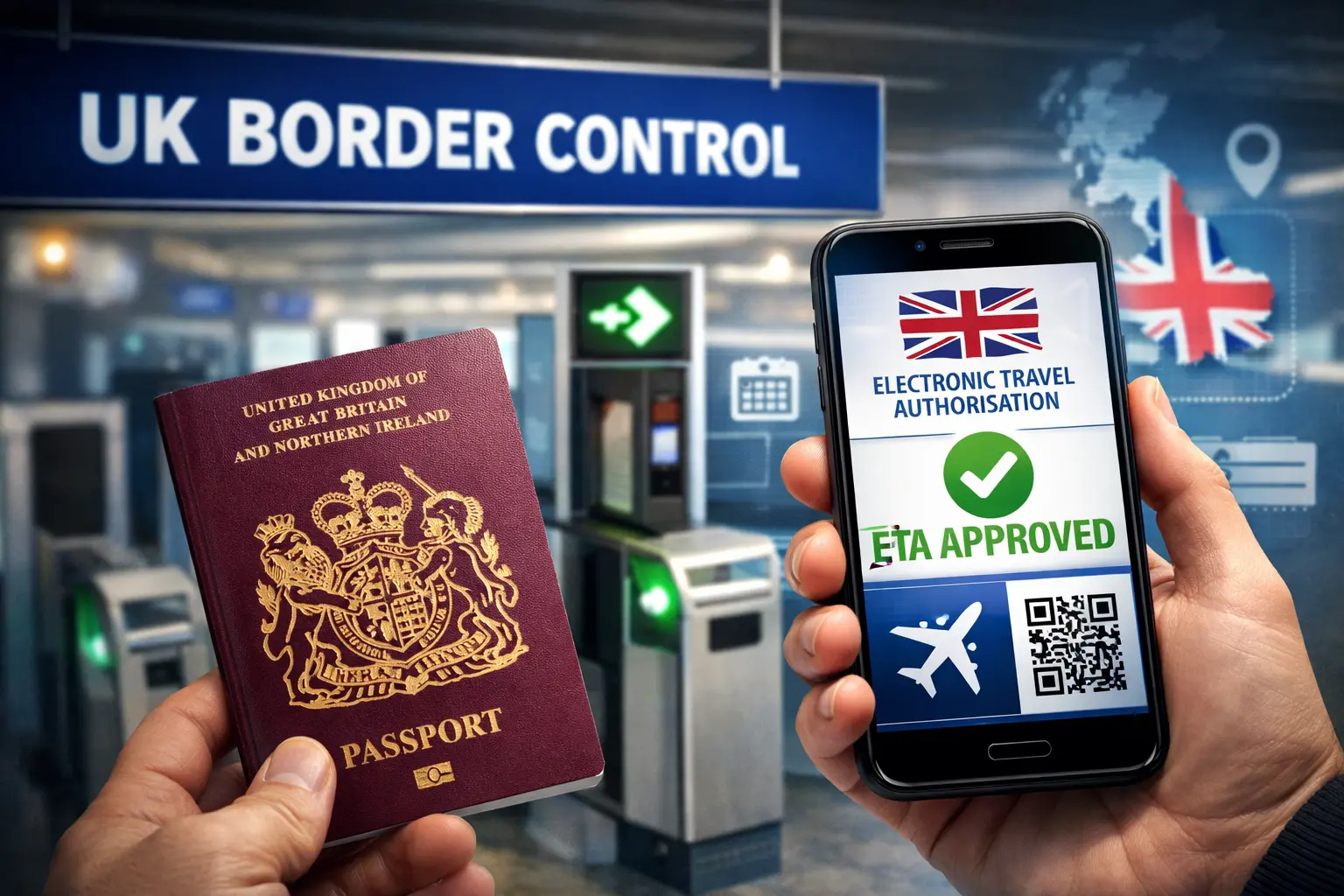
UK immigration rules 2026: ETA enforcement, eVisas, work and settlement changes
Dek: 2026 is a “digital border” year for the UK. The headline change is full enforcement of Electronic Travel Authorisation (ETA) from 25 February 2026 for many visa-free visitors. Behind the scenes, the Home Office is also shifting people onto eVisas, raising English requirements for some work routes, and moving toward earned settlement reforms planned to start in April 2026.
Lede: If you travel to the UK on a visa-free passport, the practical rule change for 2026 is simple: no ETA, no travel from 25 February 2026 (carriers can refuse boarding). Separately, migrants already living in the UK may see changes tied to digital status (eVisas), tougher work-route criteria, and a longer path to indefinite leave to remain (ILR) under the government’s “earned settlement” plans. (GOV.UK)
Key takeaways of UK Immigration Rules (save this)
- ETA becomes enforced from 25 Feb 2026 for visitors from 85 nationalities who usually don’t need a visa. (GOV.UK)
- ETA is £16, usually valid for 2 years, for trips of up to 6 months (for tourism, family visits, and some business/study purposes). (GOV.UK)
- The ETA application uses the UK ETA app (which requires a passport scan, face scan/photo) or GOV.UK; allow up to 3 working days. (GOV.UK)
- From 8 Jan 2026, some work routes require B2 English (higher than before). (House of Commons Library)
- “Earned settlement” reforms are planned from April 2026 (including a longer qualifying period for many routes). (House of Commons Library)
- The Home Office continues the move to eVisas (digital immigration status) instead of physical documents. (GOV.UK)
The 2026 timeline (what changes, when)
- 8 January 2026: Higher English requirements kick in for certain routes (including Skilled Worker, Scale-up, High Potential Individual). (House of Commons Library)
- 25 February 2026: ETA scheme enforcement date (“no permission, no travel”). (GOV.UK)
- April 2026 (planned): Start of settlement reforms (“earned settlement”). (House of Commons Library)
- End of 2026: Temporary eligibility measures for some medium-skill shortages are intended to run until the end of 2026 (important for sponsors/workers). (Financial Times)
1) ETA in 2026: who needs it, who doesn’t, and what “enforcement” really means?
What is the UK Home Office changing?
The UK has been rolling out ETAs in phases, but the key shift is enforcement: from 25 February 2026, “eligible visitors… will not be able to legally travel to the UK without an ETA.” In practice, that means airlines, ferries, and rail operators can check ETA status before travel and deny boarding if you don’t have it. (GOV.UK)
Who typically needs an ETA?
GOV.UK says most visitors need either an ETA or a visa; you “usually need an ETA rather than a visa if you’re from Europe, the USA, Australia, Canada or certain other countries.” (GOV.UK)
ETA generally covers visits:
- Up to 6 months for tourism, visiting family/friends, business, or some study. (GOV.UK)
- Certain other permitted activities (GOV.UK lists the eligible reasons). (GOV.UK)
Who does not need an ETA (common exemptions)?
GOV.UK lists examples of people who do not need an ETA, including:
- People with a British or Irish passport. (GOV.UK)
- People who already have permission to live, work, or study in the UK. (GOV.UK)
Dual British citizens warning (easy to miss): the Home Office has urged dual British citizens to carry a valid British passport or a certificate of entitlement, warning that from 25 Feb 2026 those who cannot produce this may face additional checks and may not be able to use normal passport control until nationality is verified (and can face boarding problems). (Home Office Media)
ETA cost, validity, and what it allows
- Cost: £16. (GOV.UK)
- Validity: GOV.UK guidance explains that an ETA supports travel for visits up to 6 months; Home Office material commonly frames this as a multi-trip permission over time. (GOV.UK)
- Important: an ETA does not guarantee entry border officials can still refuse entry. (GOV.UK)
How to apply (step-by-step, with what you actually need)?
GOV.UK application page and the UK ETA app guidance spell out the basics:
What do you need?
- The passport you will travel with (original passport; not a photocopy). (GOV.UK)
- An email address and a way to pay (bank card / Apple Pay / Google Pay). (GOV.UK)
- A face scan/photo and a passport scan/photo through the process. (GOV.UK)
How long does it take?
- You “usually” get a decision quickly, but GOV.UK says to allow up to 3 working days; decisions arrive by email with a reference number. (GOV.UK)
What will you be asked?
- Home Office factsheet says applicants provide contact/passport details, a compliant photo, and answer suitability/criminality questions. (Home Office Media)
Practical travel tip: If you’re travelling during the last week of February 2026, treat ETA like a boarding document: apply several working days ahead, and make sure your ETA is tied to the same passport you’ll present at check-in. (GOV.UK)
2) eVisas: the “quiet” change that affects residents, workers, students, and landlords
What’s changing?
The Home Office has been transitioning from physical immigration documents to eVisas as part of a “fully digital border and immigration system.” (GOV.UK)
What does this mean in day-to-day life?
If you have UK immigration status (work, study, family routes, etc.), eVisas typically shift “proof” to:
- A UKVI account and
- A share code workflow for employers/landlords and other checks (depending on your status and checker). (GOV.UK)
Student angle: UKCISA notes that BRPs have been replaced by a digital permission called an eVisa, and study-route vignettes have also moved to eVisa for many applicants (depending on application date). (UKCISA)
3) Work visas in 2026: higher English, tighter job eligibility, and dependants limits for some shortages
A) Higher English requirement from 8 January 2026
The Commons Library briefing and GOV.UK guidance confirm that from 8 Jan 2026, English requirements rise to B2 for new applicants on certain routes (including Skilled Worker, Scale-up and High Potential Individual). (House of Commons Library)
Why it matters: If you’re applying in 2026, English can become a gating item (test availability, preparation time, and whether your previous evidence still qualifies).
B) Skilled Worker route: job eligibility is narrower (and the “end of 2026” cliff)
A key structural change from 2025 is that medium-skill jobs were restricted, with a temporary shortage list approach for roles needed until the UK can train domestically. Financial Times reporting describes a “temporary shortage list” allowing some lower-skill roles until the end of 2026, and notes those workers cannot bring dependants. (Financial Times)
The government’s own Temporary Shortage List Stage 1 report also states that 2025 changes confirmed dependants would not be allowed for new applicants in RQF 3–5 occupations under the relevant shortage lists. (GOV.UK)
What does this mean for you (real-world)?
- If you’re sponsored into an RQF 3–5 shortage role, it can affect family planning (partner/children may not be able to come as dependents). (GOV.UK)
- For employers, it raises retention and recruitment risks ahead of the end-of-2026 review point.
C) “What if I already have a visa?”
Rules vary by route and by whether you’re applying for entry, extending, switching, or applying for ILR. For example, Citizens Advice warns the higher English level can also affect people later when extending or applying for ILR/citizenship, depending on the rules set at that stage. (Citizens Advice)
4) Settlement (ILR) reforms in 2026: “earned settlement” and a longer qualifying period
What’s proposed/planned
The Commons Library briefing states that changes to permanent residence rules are planned to begin in April 2026. (House of Commons Library)
Separately, Citizens Advice summarises the government position as planning to increase the wait to at least 10 years for most routes that lead to settlement (and that refugees may also face longer waits). (Citizens Advice)
The Home Office has also published an “earned settlement” consultation/statement that forecasts settlement volumes and frames settlement as something to be “earned,” indicating policy movement rather than a minor technical tweak. (GOV.UK)
Why this is controversial (and what to watch)
Recent reporting highlights concern about impacts on children and families if the route doubles from 5 to 10 years (or longer for some groups), including whether changes apply to people already on a route. (The Guardian)
What to watch between now and April 2026:
- Any final policy text and transitional protections (who is “grandfathered” under old rules vs moved to new rules). (House of Commons Library)
What do we know (confirmed)?
- ETA is enforced from 25 February 2026 for visitors from 85 nationalities who normally do not need a visa. (GOV.UK)
- ETA costs £16; GOV.UK says it’s for visits up to 6 months and does not guarantee entry. (GOV.UK)
- ETA applications can take up to 3 working days; the app uses passport and facial capture steps. (GOV.UK)
- The English requirement rises (B2) for certain routes from 8 Jan 2026. (GOV.UK)
- Settlement reforms are planned to begin April 2026 (exact final rules still evolving). (House of Commons Library)
What we don’t know yet (as of 12 Feb 2026)?
- The final “earned settlement” framework (including transitional arrangements) as it moves from consultation/plans into operational Immigration Rules. (GOV.UK)
Quick checklists (copy/paste)
If you’re visiting the UK in 2026 (tourism/family visit)
- Check if your nationality needs an ETA (don’t guess). (GOV.UK)
- Apply via GOV.UK / UK ETA app with the passport you’ll travel on. (GOV.UK)
- Apply several working days before travel (enforcement starts 25 Feb 2026). (GOV.UK)
If you live in the UK on a visa
- Ensure you can access your digital status (eVisa/UKVI account) and know how to generate proof when needed. (GOV.UK)
- If your route leads to ILR, track settlement announcements ahead of April 2026. (House of Commons Library)
- If you’re on/heading for Skilled Worker/Scale-up/HPI, plan for B2 English evidence. (GOV.UK)
FAQs
Do EU visitors need an ETA in 2026?
Many visa-free visitors (including from EU countries such as France) are covered by the expanded ETA enforcement starting 25 Feb 2026, but eligibility depends on nationality check GOV.UK for your passport country. (GOV.UK)
How much is the UK ETA and how long does it last?
It costs £16 and usually allows multiple journeys for up to 6 months per visit over 2 years (or until passport expiry). (Home Office Media)
Is an ETA a visa?
No—an ETA is advance permission to travel; it does not guarantee entry. (GOV.UK)
Are Skilled Worker rules changing in 2026?
Major tightening happened in 2025 (eligible jobs reduced; social care overseas recruitment ended), and some routes now require B2 English from 8 Jan 2026. (House of Commons Library)
Are settlement (ILR) rules changing in 2026?
Parliamentary briefings indicate reforms are planned from April 2026, with details still debated and evolving. (House of Commons Library)