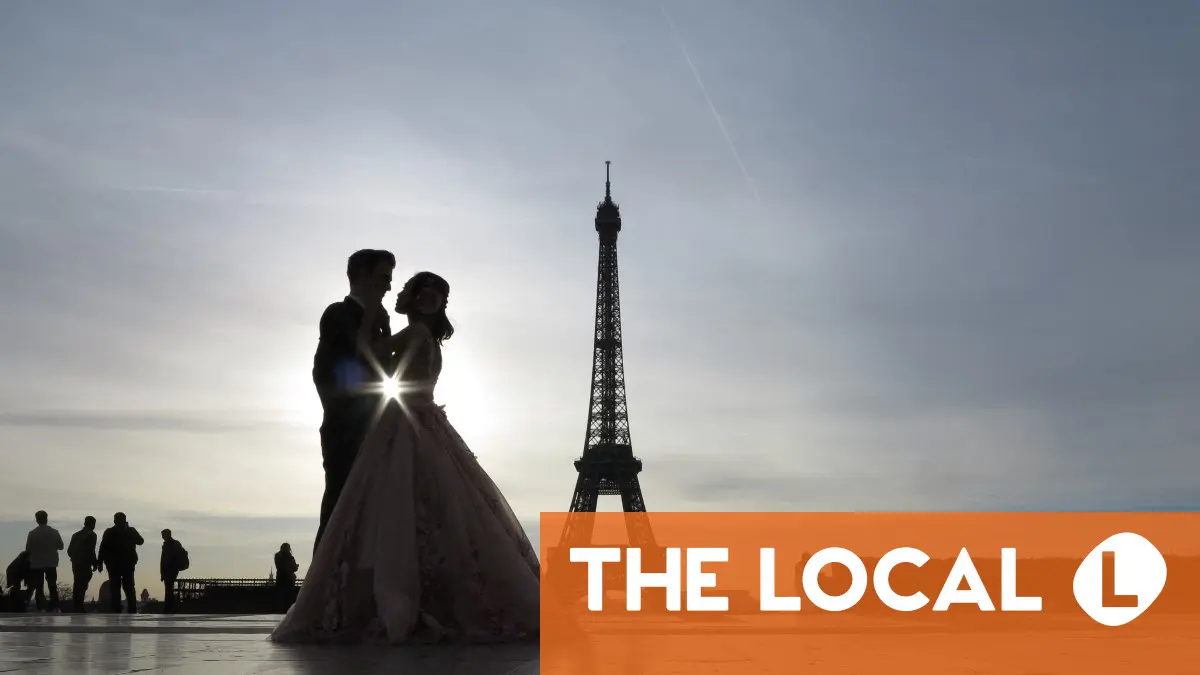
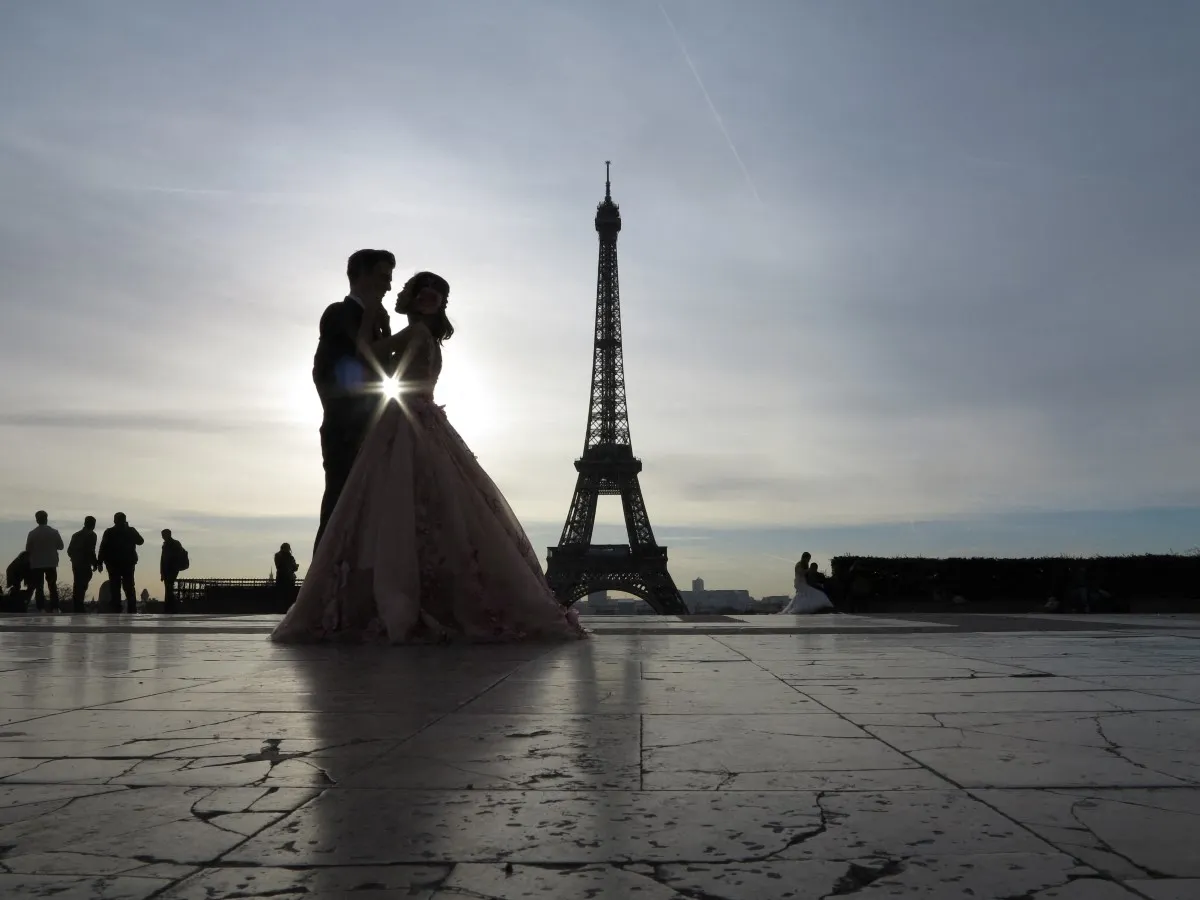
From civil ceremonies at the mairie to the famous vin d'honneur and car honking, French weddings blend legal formalities with long-standing traditions.
Whether you've been invited to your first French wedding or you're simply curious about how the French tie the knot, here's everything you can expect.
The mairie
In France, the legal wedding must take place in a town hall (mairie) before any religious or symbolic ceremony. A religious or humanist wedding on its own has no legal status.
The ceremony is conducted by the mayor or one of their deputies, who reads articles of the French Civil Code outlining the rights and responsibilities of marriage before the couple signs the register alongside their witnesses.
Couples can, if they choose, have a religious wedding as well, or a symbolic celebration perhaps with a blessing a location that is special to them - but only the mairie bit has a legal status. A religious wedding ceremony can only take place after the legal marriage at the mairie.
Before the wedding, French town halls display the couple's details on a public noticeboard in a tradition known as the publication des bans.
The notice is displayed for at least 10 days before the ceremony and is intended to allow anyone with a legal reason why the marriage should not go ahead to come forward. Although largely a formality today, the tradition dates back centuries.
READ ALSO: Wedding bells: What you need to know about getting married in France
Don't expect just one ceremony
French weddings often involve several separate events throughout the day.
A typical schedule might include: the civil ceremony at the mairie, a religious ceremony (if the couple wants one), the vin d'honneur and an evening reception with dinner and dancing.
There are no fixed rules and a schedule can be different depending on the couple's choice.
Not every guest is necessarily invited to every stage, and not every stage needs to happen on the same day. Sometimes, a couple marries formally at the town hall and organises the wedding ceremony later.
The vin d'honneur is not the wedding meal
One of the most distinctive French traditions is the vin d'honneur. Despite its name (wine of honour), it's essentially a cocktail reception held after the ceremonies, where guests enjoy Champagne, wine and petits-fours while congratulating the newlyweds.
Many people, including neighbours, colleagues or more distant friends, may only be invited to the vin d'honneur, while close family and friends continue to the evening meal.
But again, there are no fixed rules. A vin d'honneur may also happen during the main party event and precede a lunch or dinner.
Get ready for the honking
Once the ceremony is over, don't be surprised if the newlyweds leave the mairie followed by a convoy of decorated cars blaring their horns.
Known as the cortège, this part is one of France's best-known wedding traditions. The honking is intended to announce the happy news to everyone nearby and wish the couple good fortune.
In smaller towns and villages, locals often recognise immediately that a wedding is taking place simply from the sound of car horns.
READ ALSO: Anglo-French wedding blues and why it's just not worth it
Rice has largely disappeared
Throwing rice over the newlyweds was once common across France as a symbol of prosperity and fertility.
Today, however, many town halls prohibit rice because it creates a slipping hazard for guests and attracts birds. Couples increasingly opt instead for dried or fresh flower petals, biodegradable confetti or soap bubbles.
Some couples share a dance outside the mairie, so if you hear music and see a couple dancing surrounded by a group of people in their best clothes, they've usually just got married. The tradition is common in African countries so tends to happen among couples who have African family links, but it seems to be catching on it France too.
French weddings often last until sunrise
Don't make early morning plans.
French wedding receptions are famously long, often stretching into the early hours of the morning with several courses, speeches, dancing and plenty of wine.
It's not unusual for guests to still be on the dance floor at 4am or later.
During or after the main celebratory meal, the groomsmen, parents, or bridesmaids will deliver their speeches. Games may also be organised and involve all the guests - this can be in the form of a blind test (beat-the-intro music quiz) or other types of team-building activities.
Sometimes you might also see the couple's friends put on a skit or feature a video/slideshow they could have put together for the occasion.
Dessert
The traditional French wedding dessert is the croquembouche: a towering cone of cream-filled profiteroles held together with caramel and decorated with sugar.
Invented in the 19th century, it replaced the older custom of stacking small bread rolls as a symbol of good fortune for the newlyweds. While the croquembouche remains a classic centrepiece at many French weddings, modern couples are increasingly opting for alternatives such as macarons towers, dessert buffets or a selection of miniature French pastries.
Post-wedding lunch/breakfast
If the couple have hired the reception venue for the weekend, then guests are usually invited to a late breakfast or lunch the following day. You can also expect leftovers and cake.
Very probably someone will pop open more champagne. Whatever wine is leftover will also be consumed. Although everything is more relaxing than the previous day, it sends you off in a good mood with a full stomach.
Cash gifts
Wedding gift registries still exist, but many French couples who already live together prefer guests to contribute towards a honeymoon or future project.
It's common to find an urne, a decorated box where guests can leave cards containing money or vouchers during the reception. Community advice in France suggests this has become far more common than traditional household gift lists.