Germany rejects Russian threats over Ukraine support, Meta smart glasses escape German ban, Bundeswehr achieves personnel target for 2026 and more news on Tuesday, August 18th.
Tuesday's top story: Germany rejects Russian threats over Ukraine support
Germany has vowed not to be intimidated by Russian threats against countries backing Ukraine, after Russian Foreign Minister Sergey Lavrov warned that Moscow would intensify efforts to target what he called the Western support sustaining Kyiv's war effort.
Speaking in Berlin on Monday, a Foreign Office spokesperson said threats directed at EU and NATO members were nothing new and would not alter Germany's commitment to Ukraine.
The comments came amid heightened concern following the discovery of an explosives-laden drone at Leipzig/Halle Airport, a major hub for military aid shipments to Ukraine, where suspicion has fallen on Russia.
Germany's Defence Ministry said it was working closely with Ukrainian partners to ensure the security of aid deliveries and reiterated that Berlin no longer publishes details of military shipments, schedules or quantities.
READ ALSO: Germany holds security meeting over explosive drone amid Russia protest
Lavrov's remarks drew strong responses from German politicians. Marie-Agnes Strack-Zimmermann, chair of the European Parliament's Defence Committee, urged Germany to strengthen its defences and continue supporting Ukraine "with everything we have".
Low water, less housing
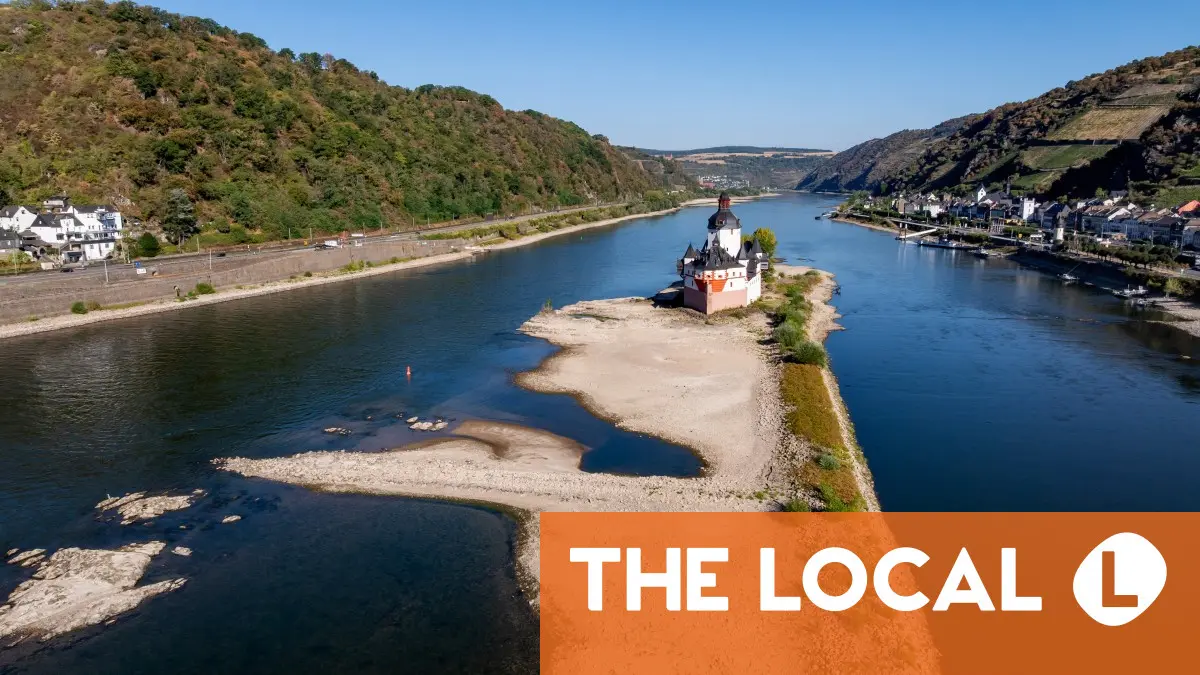
In recent weeks we have heard about water levels hitting record lows, especially on the Rhine river which comes with big potential impacts for inland shipping in Germany, and therefore also the country's economy.
Now that impact is being tied to construction, and therefore also the country's housing supply.
Shipping disruptions on the Rhine are slowing down deliveries for the construction industry, and material prices, which were already at high levels, are going through the roof.
"Sand and gravel, which otherwise often reach the concrete plants in large quantities by ship, are becoming more scarce and expensive," said the president of the Association of Construction Contractors Hesse, Thomas Reimann, adding that this comes with direct impacts for apartment building and school constructions, for example.
READ ALSO: In pictures - Germany's rivers fall to historic lows
The construction industry association HDB also warns of supply bottlenecks in key materials.
Industry leaders do not expect a nationwide standstill on construction, but rising building costs have already been cited again and again for a widespread slowing of construction across Germany.
Meta smart glasses escape German ban as privacy fears mount
Germany's telecoms regulator has ruled that Meta's controversial smart glasses can continue to be sold and used, arguing that the devices' recording function is sufficiently visible to bystanders through an integrated LED indicator.

A pair of transparent Ray-Ban Meta 2nd generation smart glasses. (Photo by JOSH EDELSON / AFP)
The Federal Network Agency said the glasses do not currently meet the legal threshold for a ban under German rules governing covert recording devices.
The decision comes despite growing pressure from privacy advocates and regulators. Anti-hate group HateAid has filed a criminal complaint against Meta, Ray-Ban and several retailers over allegations that people can be secretly filmed in public and have footage posted online without consent. Prosecutors have begun a preliminary review of the complaint.
Hamburg's data protection commissioner, Thomas Fuchs, has taken a tougher view, arguing that the glasses are effectively disguised cameras and may violate German and European privacy laws. Critics say meaningful consent from passers-by is impossible when recordings occur in public spaces.
The debate has intensified after a newly published Meta patent outlined plans for AI-powered glasses capable of continuously recording surroundings, using facial recognition and analysing social interactions.
READ ALSO: Potsdam bans smart glasses at swimming pools amid privacy fears in Germany
Germany steps up reviews of Syrian refugees' protection status
A growing number of Syrian refugees in Germany are losing their protected status as authorities reassess cases in light of changing conditions in Syria.
Figures released by the federal government show that more than 1,900 Syrians had their protection status revoked or withdrawn in the first half of 2026, accounting for just over 23 percent of reviewed cases.
The proportion marks a sharp increase from 3.7 percent in 2025 and 3.1 percent in 2024.
Most cases involve the withdrawal of refugee status or subsidiary protection, which is granted to people at risk of serious harm, including torture, the death penalty or armed conflict.
The increase follows major political changes in Syria after the overthrow of long-time ruler Bashar al-Assad by an Islamist-led rebel alliance in late 2024. German authorities argue that protection can be withdrawn when the circumstances that justified it no longer exist.
READ ALSO: 'I did everything right' - Syrian student fights deportation from Germany
Since mid-June, the Federal Office for Migration and Refugees has broadened its reviews beyond criminals and those who have already left Germany to include Syrians deemed capable of supporting themselves if they return.
Chancellor Friedrich Merz has previously said he wants 80 percent of Syria's more than 900,000 refugees in Germany to return home within three years.
Bundeswehr achieves personnel target for 2026
The Bundeswehr has reached its personnel target for 2026 of at least 186,000 soldiers.
As of July 31st, there were about 186,700 men and women in the troops, the Ministry of Defence announced. That is more than at any time in the last 13 years. Compared to July 2025, about 3,700 men and women had been added.
The defence ministry expects further growth by the end of the year. As of July, there were also around 47,300 pending applications to serve in the army, 26 percent higher than in the same month last year.
Since the beginning of the year, 18-year-old Germans have been receiving questionnaires to ask if they want to serve for at least six months. By the end of July, 378,000 letters had been sent. About 96 percent of men and a good four percent of women had answered.
Reports from around July had suggested that very few new troops had volunteered to join the German army, but the army's growth target for 2026 was relatively small. The army is to be expanded over the coming years with larger and larger targets.
READ ALSO: Germany looks to give spy services more cloak-and-dagger powers
With reporting by AFP and DPA.