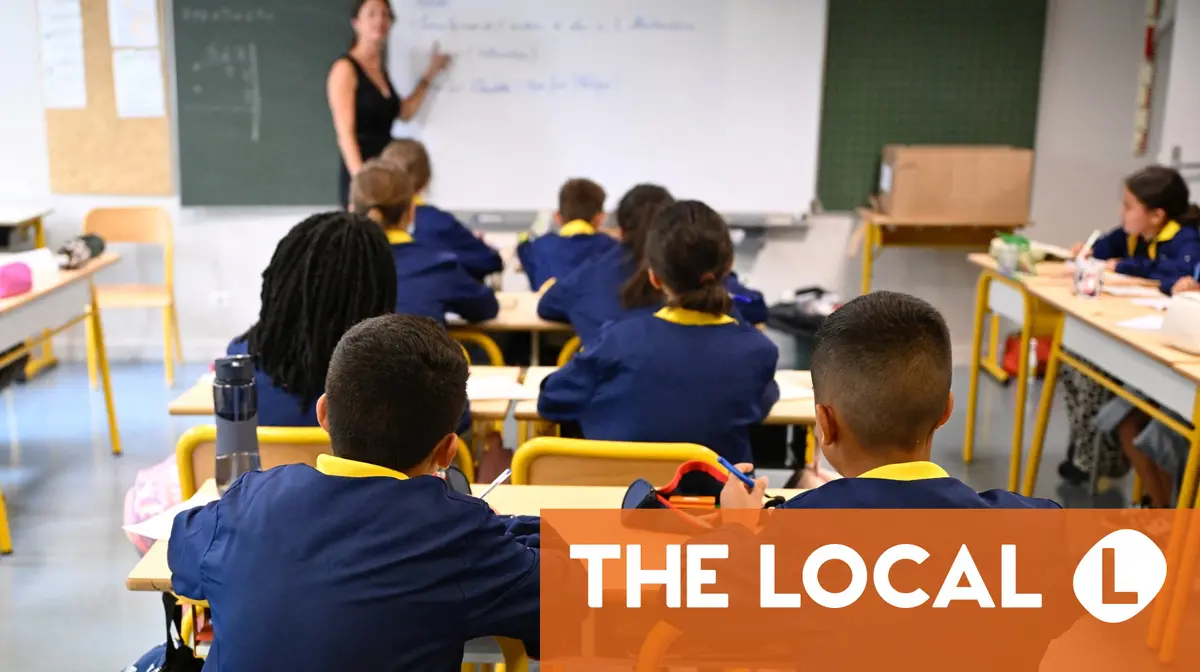
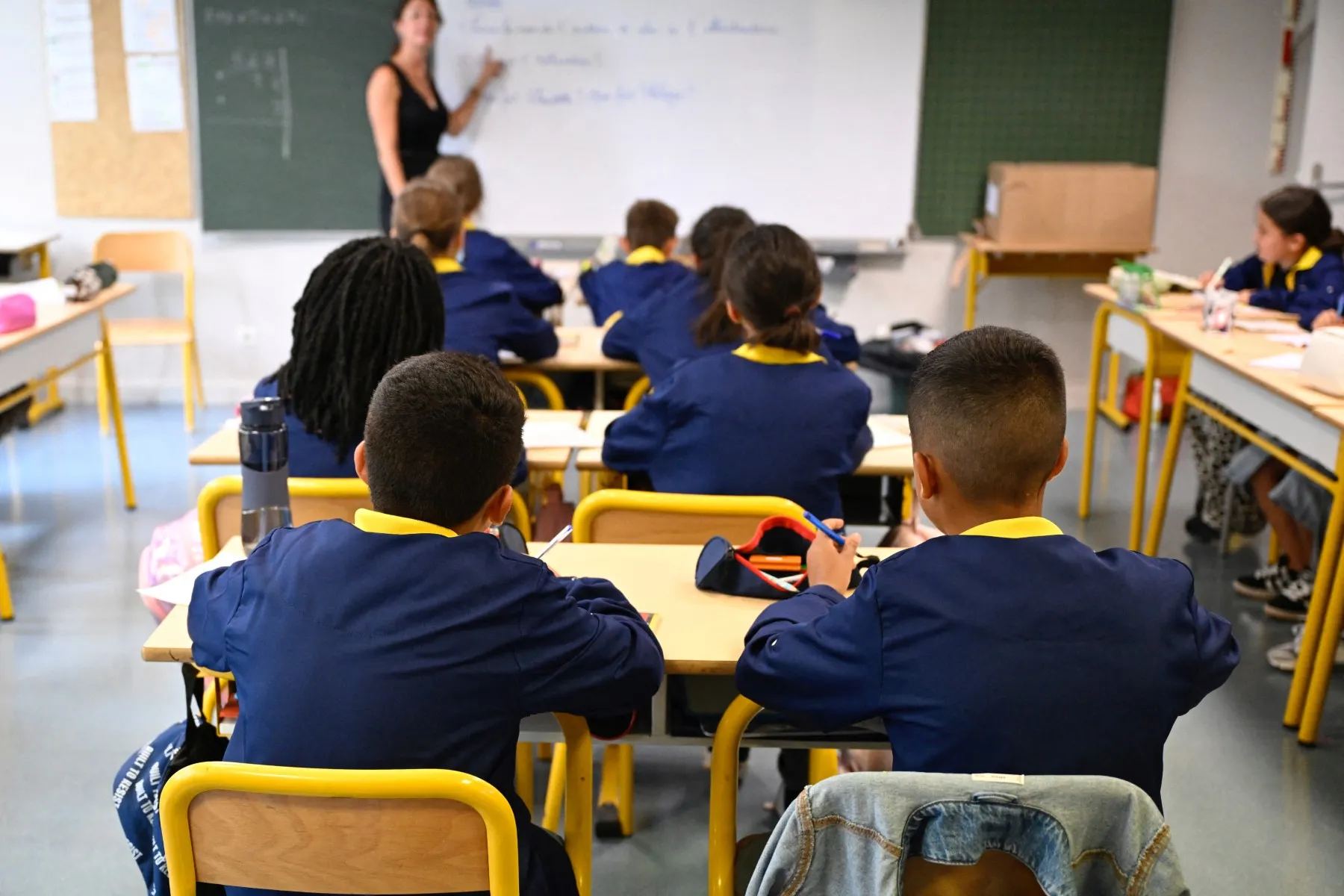
France's experiment with introducing uniforms in schools looks to be quietly ending after mixed results and a cut in government funding.
The uniform scheme was one of the flagship education policies promoted in 2023 by then education minister Gabriel Attal and backed by President Emmanuel Macron, who argued that uniforms could strengthen social cohesion, reduce inequalities and improve behaviour in schools.
But after two years of trial, mixed evaluation results and the withdrawal of state funding, most participating schools and local authorities are abandoning the project.
What was the experiment?
Unlike countries such as the UK, school uniforms are generally not part of the French education system. Most state schools allow pupils to wear ordinary clothes, although any kind of religious clothing is banned due to France's state secularism (laïcité) laws.
The uniform experiment officially began in September 2024, following an initial rollout announced by Attal in late 2023.
The experiment invited primary schools, collèges (middle schools) and lycées (high schools) to volunteer to take part. Families did not have to pay for the uniforms as the cost was shared equally between the French state and local authorities.
READ ALSO: Why is school uniform controversial in France
Falling participation
The programme never gained a lot of traction. Around 204 schools took part at the start of the 2024 school year and that number fell to 123 the following year.
Across much of France, local authorities have now concluded they cannot afford to continue without government support, and the number of participating schools is expected to be a lot lower in September.
In the Nord-Pas-de-Calais region, for example, just two municipalities, Le Touquet and Doignies, are continuing the scheme, compared with around a dozen previously.
In Denain, north of France, where uniforms had been provided for 310 primary school pupils, local officials said the programme was no longer financially sustainable after the state withdrew its contribution. The town estimated the annual cost at around €160,000, half of which had previously been covered by the government.
Similar decisions have been taken in Reims, Nice, Metz, Florange, Châlons-en-Champagne and several départements including Alpes-Maritimes and Bouches-du-Rhône.
Why has the funding stopped?
The biggest reason is financial. The government allocated €1.6 million to the experiment for the 2024 school year, but no dedicated funding was included in the following year's budget. Education officials instead found temporary funding to keep the pilot running for another year.
No funding was approved in the February 2026 budget, effectively ending the state's financial participation.
Some local authorities also cited rising manufacturing costs and the additional administrative burden of ordering, distributing and replacing uniforms.
Schools also reported practical difficulties enforcing the rules, particularly in secondary schools, where staff had to spend time checking whether pupils were wearing the correct clothing.
Did the uniforms work?
Many school leaders involved in the trial reported positive experiences. Some said pupils developed a stronger sense of belonging to their school, with fewer visible social differences between children. Supporters also argued that uniforms reduced competition over fashion and expensive brands.
However, the official evaluation painted a more nuanced picture. A report published in May 2026 by the Ministry of Education's statistical department (DEPP) found that the overall effects were limited.
Researchers concluded that there was little evidence of improvements in behaviour or academic performance, school uniforms did not fundamentally change social relationships between pupils, logistics - including ordering, distributing and replacing uniforms - created major challenges, and some secondary school students felt uncomfortable wearing uniforms outside school because they felt singled out.
While teachers and parents often believed uniforms reduced teasing and promoted equality, many students focused on the practical drawbacks and said the clothing did not fit naturally into their daily lives.
Speaking before parliament earlier this year, current Education Minister Édouard Geffray summarised the findings by saying uniforms appeared to strengthen the feeling of belonging in some schools but had little or no measurable impact elsewhere, particularly on academic results.
Is this the end for school uniforms in France?
Not entirely. A small number of local authorities have decided to continue, despite losing government funding.
This is the case in Troyes, Bouzonville (Moselle), Rillieux-la-Pape (Rhône) and Puteaux, west of Paris, where the number of participating schools is even expanding.
Béziers, which was one of the first French municipalities to introduce uniforms in 2023, plans to extend the scheme to all of its primary schools voluntarily.
Elsewhere, some towns are asking families to pay directly. In Neuilly-sur-Marne, for example, one school is joining the programme after the municipality negotiated a discounted package costing €49.90 for seven clothing items.