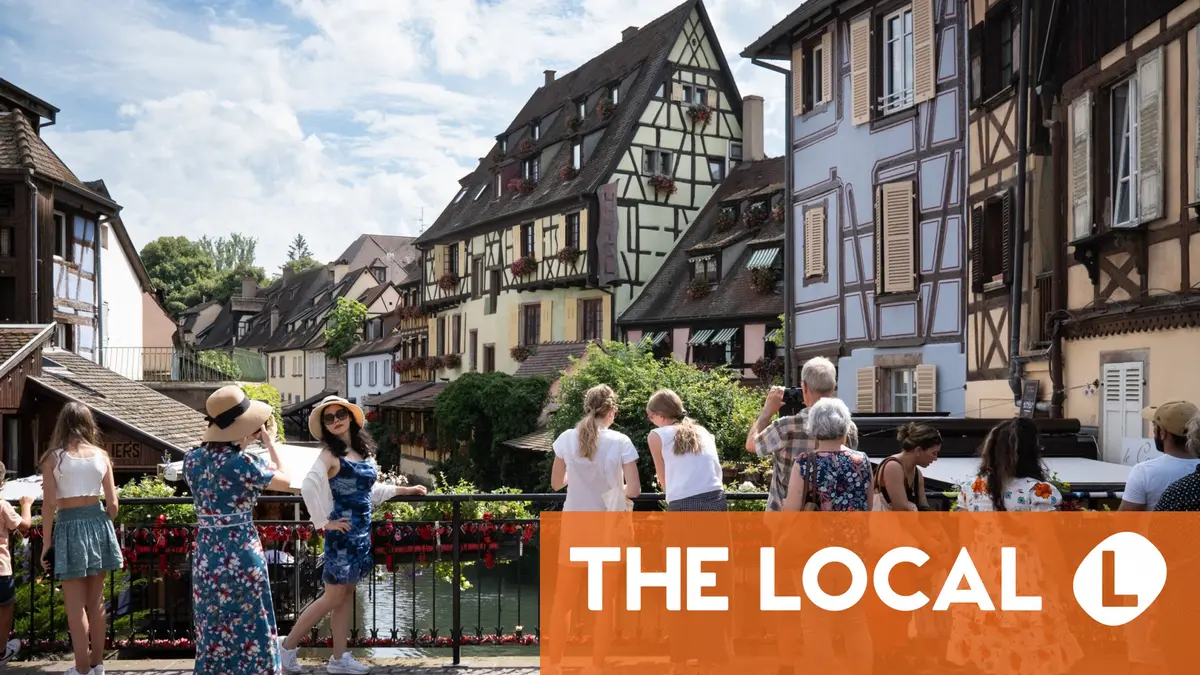
The tradition of attaching 'love locks' to bridges may be romantic, but a French town has decided that the practice has become too damaging to the infrastructure.
In Colmar, located in France's Grand Est region, authorities have banned couples from attaching padlocks to a bridge in the town's picturesque "Little Venice" district. Anyone caught ignoring the ban risks a fine of up to €300.
According to the mayor, Éric Straumann, around 600 kilograms of locks were removed during summer 2025 after officials concluded that their weight had damaged the bridge's railings. When the practice returned this year, the town opted for stricter enforcement.
"We decided to take slightly more coercive measures by threatening a fine of €300, which is clearly proving effective," Straumann told French media France Info.
Alexandre Ghaschny, who owns a souvenir shop in Colmar's medieval centre, told Le Parisien that his shop sells around 3,000 love locks each year at €6.95 each, generating roughly €18,000 in annual sales.
"I'm not going to have to close my business because of it, but it's symbolic that the mayor is targeting these items," he said.
The love lock problem
Colmar is far from the first French destination to have this problem.
Paris removed tens of thousands of love locks from the Pont des Arts in 2015 after part of a bridge railing collapsed under their weight. The city later replaced the railings with plexiglass panels and installed signs asking visitors not to attach locks.
 A worker removes "love padlocks" attached to the railings of the Pont des Arts bridge in Paris on June 1st, 2015. (Photo by STEPHANE DE SAKUTIN / AFP)
Despite those efforts, the tradition has proved difficult to eradicate. Visitors continue to find ways to leave locks on the bridge, attaching them to remaining railings, anti-theft barriers and other nearby structures.
Plenty of other French towns simply ask visitors to refrain from adding 'love locks' to their bridges or other street furniture, pointing out that they damage the infrastructure.
The tradition of "love locks" is believed to have originated in the small Serbian town of Vrnjačka Banja.
According to local legend, a schoolteacher named Nada and an army officer named Relja pledged their love to each other on a bridge before Relja departed to fight in World War I. While stationed in Greece, however, Relja fell in love with another woman and married her, leaving Nada heartbroken. The story says that she never recovered from the betrayal and eventually died of grief.
In response to this tragic tale, local couples began fastening engraved padlocks with their names to the bridge and throwing the keys into the river below - a public, symbolic gesture representing a symbol of unbreakable love.
The custom gained wider recognition after Serbian poet Desanka Maksimović immortalised the story in one of her poems, helping to spread the romantic tradition beyond the small town.