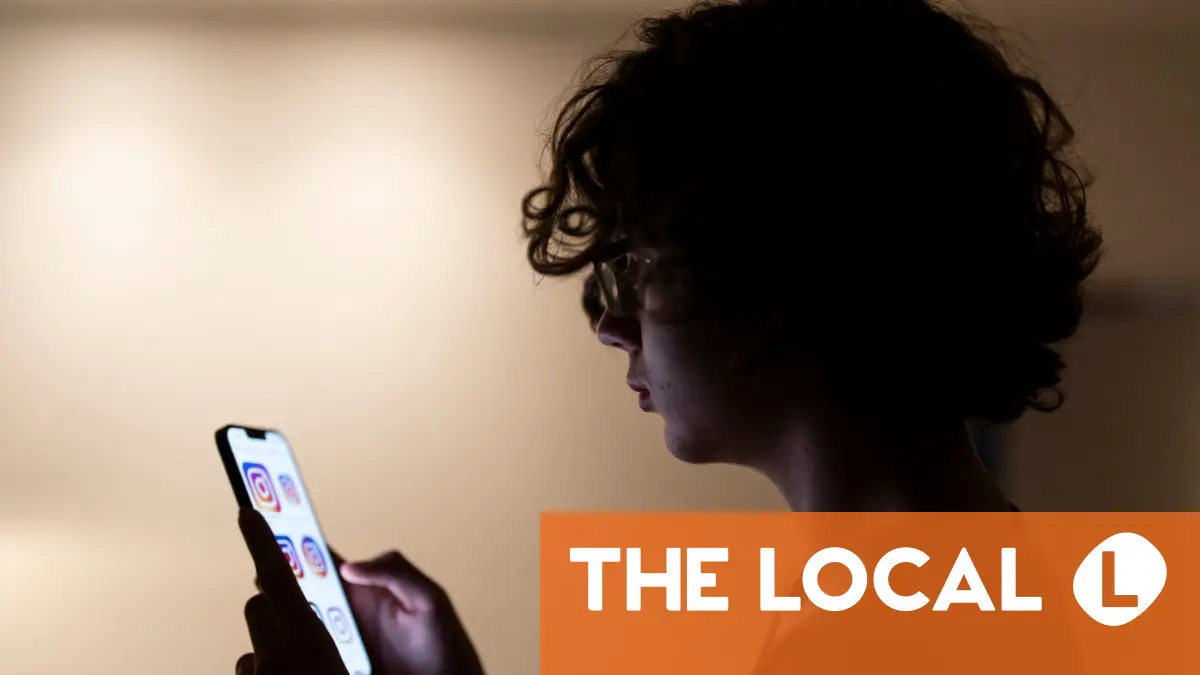
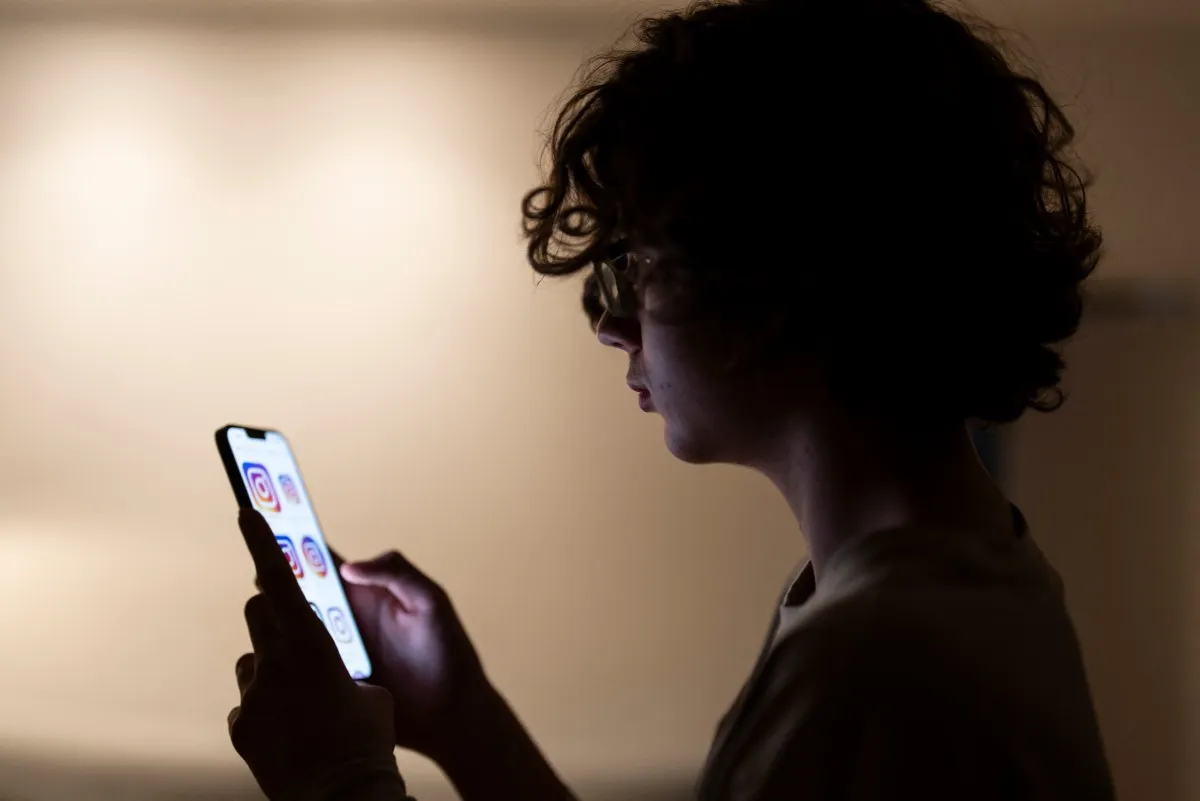
The French parliament has passed legislation banning under 15s from using social media, with a projected start date in September – but how will that work in practice?
The headlines are clear: France has become the first EU country to ban social media access for children under 15.
“France is leading the way in Europe when it comes to protecting our children and teenagers,” President Emmanuel Macron said – in a social media post — hailing “a major step forward” as he thanked MPs for passing the legislation following months of debates.
“The Conseil constitutionnel must now rule on it, and then it will be time to take action to make this measure a reality and protect our children online,” he added in the post on X.
He pledged to have the law up and running when millions of children in France head back to school on September 1st.
A number of other EU nations are watching closely to see how successfully the French ban rolls out – Spain and Greece are ready to follow legal suit, according to Anne Le Hénanff, France’s Minister Delegate for Digital Affairs.
But how will this actually work in practice and what does it mean for child (and adult) social media users in France?
In truth, there’s a lot we still don’t know – and the timescale to implement them is short.
When?
The law requires social media platforms to verify the age of users and prevent access to services considered réseaux sociaux (social media network) for those under 15.
The ban will be implemented in two phases. The first – the one that’s actually set to start on September 1st, 2026 – will require new accounts to be subject to age verification at the point they’re set up.
The second, in which social media providers have to verify the age of users’ existing accounts, is scheduled to come into effect on January 1st, 2027. Accounts held by under-age users will be suspended from that date.
As Macron mentioned, the Conseil Constitutionnel must rule on the law - as is standard practice with all new laws - to ensure that it is in accordance with the French constitution. The council can also impose changes to the detail of the law.
Which platforms?
A valid question. Instagram, Tiktok, Facebook and Snapchat have all been mentioned in passing, but not in the bill as it stands.
The law aims to prohibit access to social networks provided by an online platform for minors under 15 years of age, “namely Instagram, Tiktok, Facebook and Snapchat, as well as services allowing interactions, public broadcasts or participation in user communities”, according to a Senate press release issued after the bill passed the committee stage two days before the final vote in a form close to a blanket ban that had been originally envisaged.
Platforms such as Twitter, Bluesky or Mastodon - which generally have an older user base anyway - are not specifically mentioned, although these are widely agreed to be social media platforms.
But the text also includes a number of exceptions, notably for “online encyclopedias”, as well as services such as “platforms for developing and sharing free software”.
Then there are those sites that could be considered 'grey areas' - for example, is YouTube a social media network or a video platform? What about Roblox, which describes itself as “the ultimate virtual universe that lets you create, share experiences with friends, and be anything you can imagine” but may be considered one of those “platforms for developing and sharing free software”?
Where does end-to-end encrypted messaging tool WhatsApp, with its close-to-social media channels fit in?
Lots of questions. Few verifiable answers.
The normal format for French laws is that once a bill is passed in parliament a decree is written which nails down the specifics, and once the decree is published in the Journal Officiel, the law is binding.
“In the absence of any list of the platforms concerned, defining its scope will fall to the European Commission,” the Senate’s press release adds.
How will a user’s age be verified?
The bill puts the onus for this on the social media networks themselves to ensure its users aren’t underage.
Le Hénanff told journalists: “We are placing the responsibility on social networks, meaning that they are the ones who will have to find the technical solutions to verify age.”
But, while France’s social media ban seems to skirt the issue, the EU’s Digital Services Act imposes a double anonymity standard to prevent platforms having direct access to identity documents.
Using this method, a trusted third party verifies a user’s age via an ID document or bank card, then issues confirmation that would-be users are age appropriate to the platform to which they’re trying to subscribe.
Age verification solutions are already in place – there are limits for access to adult websites, for example.
And the European Commission is developing a system of its own, which should be available to member states by the end of the year – France is one of the countries in which it is being tested.
Other tools are also being considered, such as France Identité or one developed by Docaposte, a subsidiary of La Poste which already manages digital workspaces that students access as part of their schooling.
Platforms will be expected to offer users a choice of ID solutions.
Will this affect adults too?
It seems likely. Once the law gets to the second phase, social media platforms will be expected to verify the age of all users, so presumably adults can look forward to a pop-up telling them to verify their age to allow them to continue using their platform of choice.
Exactly when this will happen, however, remains unclear.
Won’t it just be sidestepped?
Critics certainly think so, and they cite Australia as an example. Seven months after the social media ban was imposed there, it seems not to have worked as intended.
An initial study suggests that children’s social media habits have changed little, even after platforms deleted millions of accounts. Users merely registered using fake ID, or have started to log in using VPNs or private browsing. VPN downloads nearly tripled after the introduction of age restrictions on adult content in March 2026.
Meanwhile, after the UK's age verification measures came into effect in July 2025, comments on Reddit discussions about circumvention techniques jumped by 460 percent, according to a study, while VPN downloads soared to 2 million.
What punishment?
The onus – and, therefore, the risk of sanction – is on the social media platforms rather than users. Children (or their parents) will not be punished if they continue to use social media once the ban is in force.
And what critics fail to mention is the Australia model also shows that law with real teeth may ultimately have results. The Australian regulator has launched investigations into five platforms suspected of failing to effectively verify users’ age, and fines for non-compliance have been doubled to €60 million.
In France, the European Commission will be responsible for sanctioning non-compliant entities. It can impose fines of up to six percent of a company’s global turnover.
And, according to Le Hénanff, any dip in social media use by under-15s is a step in the right direction, implying that the law and enforcement may be toughened in future.
One more thing
The social media ban is the headline story of the bill that was passed. But it includes one other important law change.
The bill also imposes a smartphone ban on pupils in lycées, to go with the one in place for pupils in collèges, from the start of the 2026/27 school year.