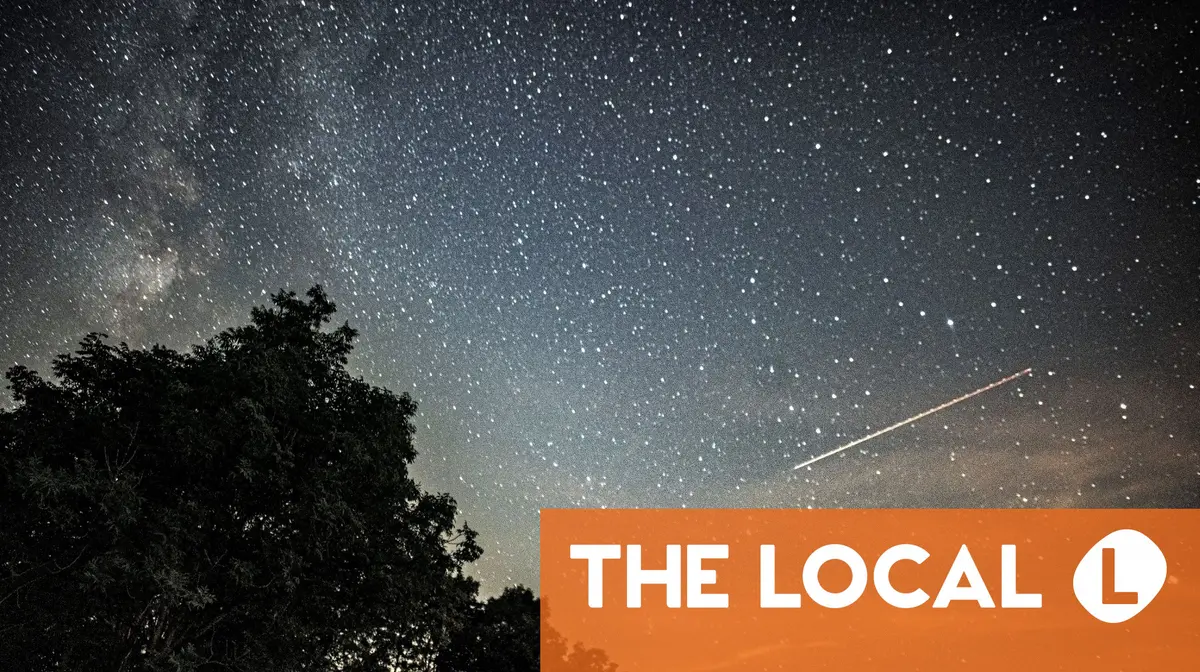
France's annual Nuits des Étoiles (Starry night) returns starting Friday, August 7th to Sunday, August 9th, with more than 600 free events taking place across the country.
Next week is the highly anticipated partial solar eclipse, but if you want something to get you into the mood earlier, try a 'starry night' event.
Launched in 1991 by the Association Française d'Astronomie (AFA), the Nuits des Étoiles has become one of France's biggest annual science events.
READ MORE MAP: How and when to see the solar eclipse in France
This year's edition features more than 600 observation sessions in 415 communes, organised by over 320 astronomy clubs, associations and local authorities. All events are free and open to beginners, with volunteers on hand to explain what you're looking at as well as help visitors use binoculars and telescopes.
The AFA has published an interactive map showing every participating site across France, allowing visitors to find the nearest event.
 AFA interactive map. (Credit: AFA)
So what will you be able to see?
People will be able to spot the major summer constellations, including Cygnus, Lyra and Aquila, while telescopes will also reveal star clusters, nebulae and distant galaxies.
If you're somewhere with little light pollution, you'll also be able to admire the Milky Way stretching across the sky. The Andromeda Galaxy, the nearest major galaxy to our own, can even be seen with a good pair of binoculars.
Several planets will also be on display: Venus shortly after sunset, Saturn rising at around 11.20pm and Mars appearing from around 3am.
The famous Perseid meteor shower will already be active during the weekend, although the best display comes a few days later.
Its peak is expected during the night of August 12th-13th, when observers could see between 10 and 30 meteors per hour under favourable conditions - roughly one shooting star every two to six minutes.
The eclipse is on August 12th, making these a very special couple of days.
This year should provide particularly good viewing for the meteor shower because the new moon will leave the sky exceptionally dark once the partial solar eclipse has passed.
Where should you go?
While it's possible to see the brightest stars from towns and cities, you'll enjoy a much better view if you are in the countryside.
Artificial lighting makes it difficult to see the Milky Way and fainter celestial objects, so astronomers recommend choosing a location away from urban light pollution if possible.
France has also been making efforts to reduce light pollution in recent years, with many communes dimming or switching off public lighting overnight.
Eclipse
Several Nuits des Étoiles events will continue until the day of the eclipse, giving people the chance to observe both events with experienced astronomers.
Depending on where you are in France, more than 90 percent of the Sun's disc will be obscured during the eclipse.
Anyone planning to watch it must use certified eclipse glasses meeting the ISO 12312-2:2015 safety standard. Looking directly at the Sun without proper eye protection can cause permanent eye damage.
Current forecasts from Météo-France suggest skies should be generally clear across much of France, raising hopes of excellent viewing conditions for both the eclipse and the peak of the Perseid meteor shower.