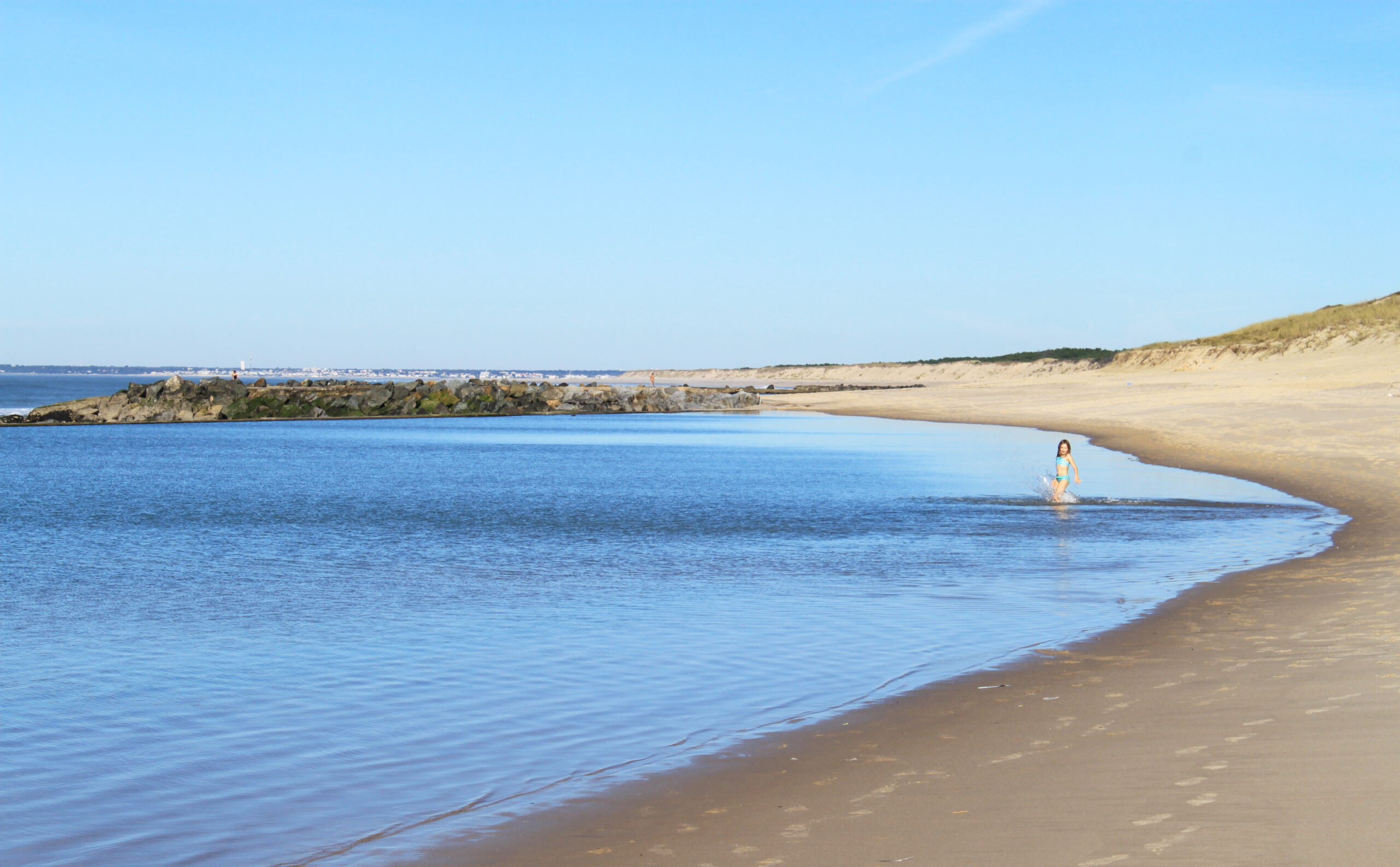
You hear the Atlantic before you see it in Soulac-sur-Mer. The steady pull of the tide, the salt carried on the wind, then suddenly the horizon opens, wide and uninterrupted. Stepping onto the beach on a bright summer afternoon, I paused. The sand was cool and firm underfoot, the air sharp and clean. It felt both expansive and grounding.
What stood out just as quickly, however, was something less obvious: how possible it felt to be there. Soulac-sur-Mer is not entirely step-free, nor does it claim to be, but there is a quiet, practical effort to make the town accessible in ways that genuinely shape the experience.

Arriving by cruise for a short port stop, I travelled into town with my husband and my carer companion, Wayne. Time was limited, yet Soulac did not feel hurried. Its compact layout and calm pace make it surprisingly manageable, even within a few hours.
The beach draws you in immediately. Walking along the shoreline as the tide recedes, the sand shifts underfoot, firmer near the water, softer further back. Maintenance vehicles move steadily in the distance, keeping the coast clean and level. It is a small detail, but one that matters. Smoother sand can make all the difference for those navigating uneven terrain.

In summer, the main beaches, including Plage des Olives and Amélie, are supervised and lively without feeling overcrowded. There are designated access points, and in some areas, seasonal equipment such as beach wheelchairs helps more visitors reach the water safely. Lifeguard stations are clearly marked, and there is a reassuring sense of organisation along the shoreline, particularly during peak months.
Getting back up to the promenade is more demanding. The incline is steep in places, and there are sections without handrails. It is a reminder that accessibility here is not seamless. And yet, there is space to pause, to take your time, to turn and look back out at the Atlantic stretching endlessly behind you. That balance between effort and reward becomes part of the experience.

In the centre of town, the tourist information office on Rue de la Plage offers a different kind of ease. With step-free entry and a thoughtful layout, it provides clear, practical guidance tailored to individual needs. Staff take the time to explain accessible routes, transport options, and where to find affordable food. It is not simply informative, it is considerate.
Public transport adds to that sense of independence. Local buses are inexpensive and often equipped with ramps or low floors, making them usable for travellers with reduced mobility. There are also regional train connections linking Soulac to larger towns in the Médoc and towards Bordeaux, offering further flexibility. Taxis are available, though booking ahead is advisable during the busy summer period. For those arriving by car, parking is available near the centre and beachfront, with some designated accessible spaces.

At the heart of Soulac stands the remarkable Basilica of Notre-Dame-de-la-Fin-des-Terres. Partially buried by sand for centuries and later uncovered, it is now listed as a Historic Monument and recognised by UNESCO as part of the pilgrimage routes to Santiago de Compostela. Inside, the atmosphere is calm and uncluttered. The main entrance is level, and there is enough space to move comfortably, with seating available for those who need to rest.
Beyond its history, Soulac retains the charm of a nineteenth century seaside resort. Villas in soft pastels line the streets, while the central market hall, open from spring through early summer, offers a vivid snapshot of the region, seafood, cheeses, fresh produce, and Médoc wines.

For visitors with dietary requirements, eating out here is refreshingly straightforward. Many restaurants are accustomed to adapting dishes on request, particularly when it comes to gluten-free, vegetarian, or allergen sensitive options. Menus are typically simple and ingredient led, making it easier to identify what will suit your needs without difficulty.
Places such as La Brasserie de la Plage and Le Grill Océan focus on fresh seafood and seasonal cooking, and staff are generally willing to adjust dishes where possible. Restaurant des Pins offers a slightly different approach, blending French and Thai influences, with flexible options that can accommodate varied diets. Across the town, cafés and smaller eateries often provide outdoor seating with space to move comfortably, and takeaway options are easy to find for a more flexible schedule.
Accommodation ranges from small guesthouses to seaside hotels, many within easy reach of the centre. While not all buildings are fully accessible due to their age, an increasing number offer ground floor rooms or adapted facilities, and it is worth checking in advance to match specific needs. Some properties also provide quieter settings slightly outside the centre, which can be beneficial for those seeking a more relaxed stay.
Markets, too, play a role here. The covered market’s wide aisles allow for easier navigation, and visiting earlier in the day helps avoid the busiest periods. Seasonal events such as the Amélie Night Market bring a more relaxed atmosphere, though uneven ground and crowds are worth keeping in mind when planning a visit.
Along the coastline, accessibility continues to improve. Beaches such as Plage des Olives and Amélie are supervised in summer, with some adapted access points and initiatives, including amphibious beach chairs in peak season, designed to open up the shoreline to more visitors. These may require planning ahead, but they reflect a growing awareness of inclusive tourism and a willingness to improve access over time.

For those looking to stay active, there are walking and cycling routes through pine forests and along the coast. The town sits on the La Vélodyssée, offering scenic paths that can be enjoyed at different paces. Water based activities such as paddleboarding, gentle swimming, and even beginner surfing lessons are available during the summer months, with instructors often able to adapt sessions where needed.
There is also the Tèrra Aventura trail, a gentle three-kilometre route linking the basilica, beach, and villas, accessible even with a pushchair and a relaxed way to experience the town at an easy pace.

By the end of the day, what stayed with me was not just the landscape, but the feeling of moving through it. Soulac-sur-Mer does not present itself as fully accessible, and there are challenges, slopes, sand, and uneven paths. But there is also patience, adaptability, and a sense that visitors are welcome as they are.
For travellers planning a longer stay, the rhythm of the town becomes even more apparent. Mornings are calm, ideal for quieter beach visits or market shopping, while evenings bring a gentle energy to the centre, with people gathering in cafés and along the promenade. This natural pacing makes it easier to plan days around individual needs without feeling rushed or overwhelmed by crowds.

As we returned to the port, the town felt clean, calm, and quietly thoughtful. In Soulac-sur-Mer, accessibility is not an afterthought, it is something being shaped gradually but meaningfully into the rhythm of everyday life.
And perhaps that is what makes it worth returning to, not just for the Atlantic light or the long beaches, but for the simple, valuable ease of being able to experience it in your own way, with confidence, comfort, and independence.
Your email address will not be published. Required fields are marked *