Justin Postlethwaite hops on the iconic French bike, which came to fame in the 1940s and is now enjoying a renaissance
“Plus ça change, plus c’est la même chose” is the much-quoted French proverb that translates as “the more things change, the more they stay the same”. Coined by French critic, journalist and novelist Jean-Baptiste Alphonse Karr in his journal Les Guêpes (The Wasps) in 1849, it implies that, despite turbulent moments or the passing of time, beneath the surface remains a certain status quo in human desire, need or manners.
In addition to serious matters, such as the behaviour of politicians, this notion also applies to many of the cyclical trends in the fields of culture and leisure that are evident in France and elsewhere today – the vinyl revival, fashion movements from the past reimagined, musical influences from earlier decades, and so on.

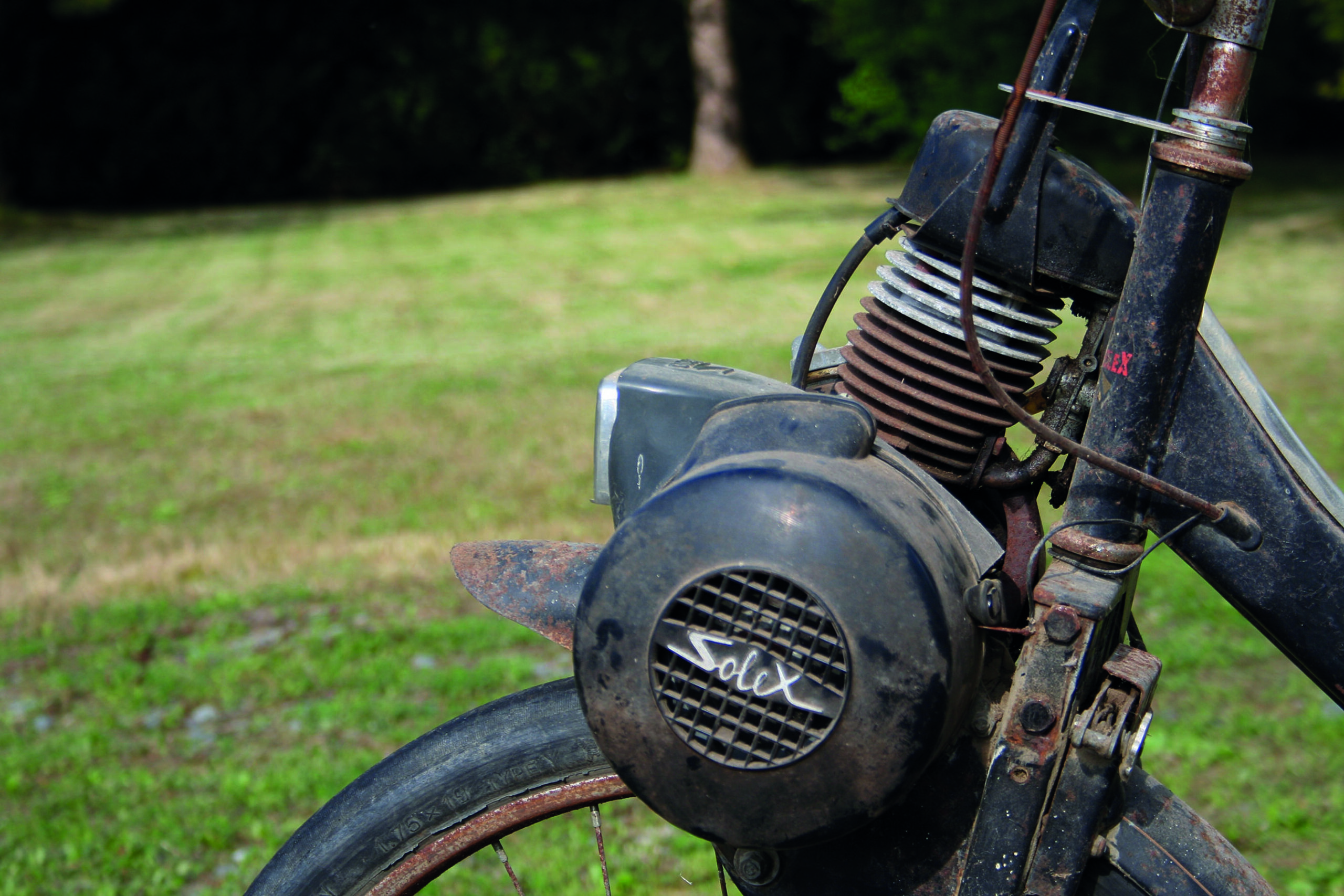
One such ‘plus ça change’ French icon enjoying renewed popularity is the Solex powered bicycle, which has become something of a hipster object of desire. Its renaissance – as both a handy urban transport solution and a rural tourism tool – reflects the modern penchant for slowness, harking back to an ingrained human appreciation of a gentler way of life. The fact that its top speeds are around 25-35 km/h does not deter even the busiest cool Parisian, for whom a meagre 15mph is faster than being stuck in a traffic jam.
The great allure of the Solex, which was first sold commercially as VéloSoleX in 1946 and was dubbed “la bicyclette qui roule toute seule” (the bicycle that rides itself), is its simplicity and ease of riding. Around 8m have been sold around the world and the great and the good – from Brigitte Bardot to Steve McQueen, from Robert Redford to Bourvil, and from Mr Bean to the iconic Jacques Tati in Mon Oncle – have all enjoyed riding one.
Modern Solexes are not fuel-powered but electric, though an aesthetic nod to the original’s engine that sat atop the front wheel remains in place. The latest E-Solex incarnation is about to hit French roads, made by Groupe Rebirth. The company’s aim, designer Ridge Chamand recently told France 2, is to preserve the appearance of the small engine. “We wanted to keep this signature feature and turn it into a new functionality, so I’m proposing a glove compartment where you can charge your phone,” he said.

a poster for the 1958 film Mon Oncle, in which legendary funnyman Jacques Tati rides a Solex
FUN AND FREEDOM IN THE VINEYARDS
I enjoyed a wonderful day on a Solex in the Vaucluse a few summers ago, and I can attest to the unbridled joy of pootling around the vineyards, parking up to enjoy a picnic and a glass of rosé in the shade of an olive tree.
Even at a gentle pace, it created a welcome cool breeze to cut through the sultry air, and, being so close to the soil, vines and vegetation as I made my way along stony paths, I got a real sense of the Provence terroir. Because I was riding on mainly private land I had no need for knowledge of the code de la route (Highway Code). Today, plenty of oenotourism offerings includes Solex hire – this highly recommended holiday concept is enjoying a real boom.

Riding Solexes on the Île de Ré
While French production halted in 1988, you can still buy an original two-stroke engine Solex pretty cheaply from specialist dealers and private sellers on sites such as Le Bon Coin, though they are in various states of disrepair so seek expert advice.
There is a private Solex museum in Wissembourg, Alsace, and also a vibrant vintage Solex scene, with festivals, races in fancy dress and other gatherings of like-minded vintage vélo lovers, such as Rock’n Solex 2025 in Rennes (www.rocknsolex.fr).
You can read more about the contemporary Solex and find a retailer at solex.world
Lead photo credit : A Solex 3300; a Solex Intemporel 1946 Confort Edition Versailles
Your email address will not be published. Required fields are marked *