Almost a quarter of France is now affected by smoke from the huge wildfires raging in the south of the country - so how dangerous is this and what steps can you take to protect yourself?
France's 2026 wildfire season is shaping up to be one of its worst yet, with huge blazes in the south west, as well as smaller fires in central or norther France - and likely more to come. Find the latest here.
READ ALSO: MAPS: Where are all the wildfires and warnings in France right now?
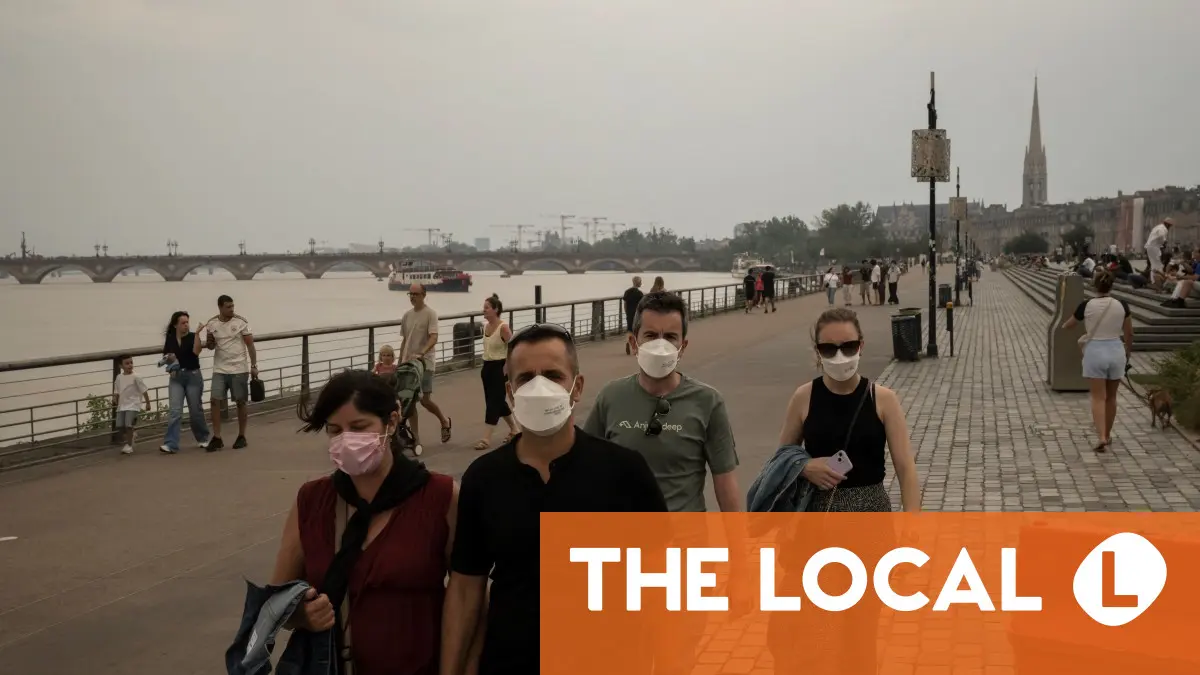
Even people several hundred kilometres away have reported smelling smoke, while skies have taken on an eerie, otherworldly quality due to the smoke.
Large parts of France are now under warnings for poor air quality, linked to the wildfires.
What is in the smoke?
Fires burning vegetation generate gas and particles in the air that are dangerous for our systems, said Anses, France's health safety agency. Fine particles are particularly bad, because they can penetrate deeply into the lungs.
Carbon monoxide is one of the major pollutants released by such fires, the agency said, which listed other chemical substances also, such as carbon dioxide, volatile organic compounds including acrolein, formaldehyde and benzene.
As well as these, other pollutants can be mixed in if vehicles or buildings are consumed by flames.
How dangerous is it?
In December 2025, in its annual report on climate-change risks to health, the medical journal The Lancet estimated that "exposure to wildfire smoke led to an estimated 154,000 deaths" the previous year, worldwide, attributed to fine particulate matter.
For France, the charity Oxfam estimated that there were 2,800 early deaths yearly from air pollution caused by wildfires.
Although people with respiratory conditions like asthma are most likely to immediately notice symptoms, French pulmonologist Bruno Crestani told AFP that the long-term effects needed to be taken into account for the entire population, and not only for vulnerable persons.
Anses underlined effects on firefighters, not only as they battled blazes, but also indirectly, as they monitor extinguished areas, carry out investigations and clearing, and also when back in the fire station with contaminated equipment and vehicles.
Other factors could increase their vulnerability, such as smoke inhalation, heat stress, dehydration, strenuous work, sleep deprivation, accumulated fatigue and accidents, the agency said.
Air quality
The severe fires in Gironde are causing a large cloud of smoke and ash, leading to a significant deterioration in air quality. The Bordeaux metropolitan area and the coastline are particularly affected by this toxic pollution, which can pose a risk to residents’ health.
According to ATMO Nouvelle-Aquitaine, the region's air quality monitoring agency, air quality in the immediate vicinity of the wildfires has been rated poor, very poor or extremely poor, with high concentrations of fine particulate matter released by the fires.
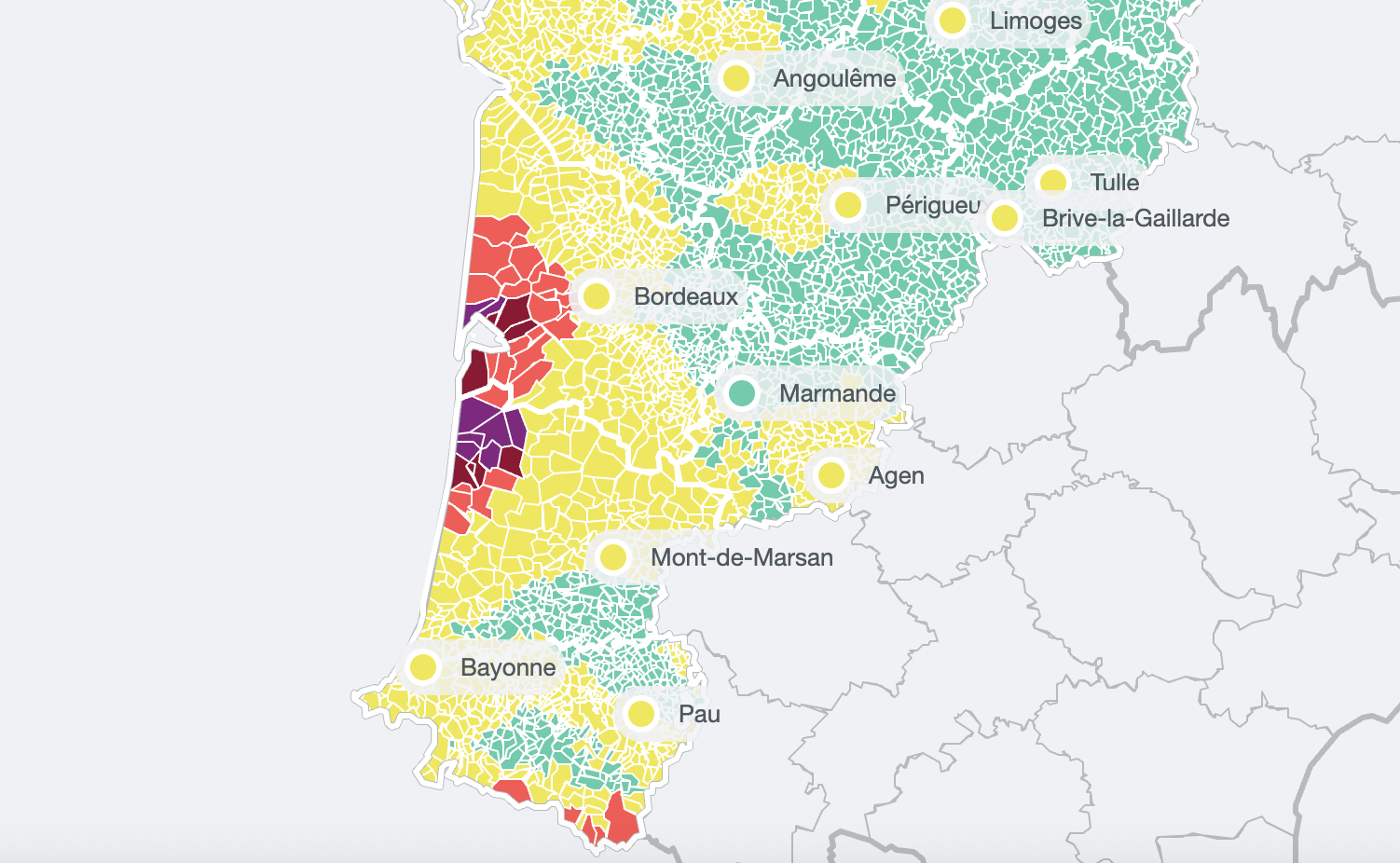 Air quality map on July 28th. (ATMO)
Check the air quality in your area with this interactive map. On the map, light blue indicates good air quality, green moderate air quality, yellow degraded air quality, red poor air quality, burgundy very poor air quality, and purple extremely poor air quality.
How should you protect yourself?
The Nouvelle-Aquitaine Regional Health Agency (ARS) announced on Tuesday July 28th, that 2 million FFP2 masks from the national emergency stockpile have already been delivered to pharmacies, in addition to the pharmacies' own supplies in the Gironde and Landes départements.
By Wednesday, a total of 3.5 million FFP2 masks will have been supplied.
Readers will likely remember FFP2 masks from the Covid pandemic - they're the heavy duty 'duck' masks - and if you still have any in a cupboard, they can be used now.
The use of these masks is primarily recommended for people who are most vulnerable to the effects of wildfire smoke and air pollution, including:
- People with chronic heart or respiratory conditions, such as asthma, chronic respiratory disease, or heart failure.
- People with chronic illnesses that increase their vulnerability, including diabetes, dialysis patients, and those with weakened immune systems.
- Other vulnerable groups include older adults, young children, and pregnant women.
The recommendation also applies to healthcare professionals, caregivers, emergency responders, law enforcement officers, and, more broadly, anyone whose work exposes them to smoke or periods of poor air quality, including during work-related travel.
FFP2 masks should be worn so that they fit tight over both the nose and mouth. They should be replaced as soon as they become damp, dirty, or difficult to breathe through, and no later than after one day of use (approximately 8 hours of cumulative wear).
According to health authorities, other types of face masks offer little to no protection against wildfire smoke. If an FFP2 mask is unavailable, covering the nose and mouth with a damp cloth may provide limited protection from smoke, although it is not an effective substitute.
Limiting time spent outdoors remains the most effective way to reduce exposure to smoke, as FFP2 masks do not filter out harmful gases.
The ARS has also issued health advice for people living near active wildfires or affected by smoke carried by the wind. It recommends that residents:
- Limit time spent outdoors and avoid unnecessary travel.
- Keep doors and windows closed, only airing homes when conditions improve.
- Maintain good indoor air quality by avoiding activities that generate indoor pollution, such as smoking, burning candles or incense.
- Cover air vents with damp cloths.
- Rinse the eyes, face and skin thoroughly with clean water if smoke causes irritation.
- Switch off mechanical ventilation systems while smoke levels remain high.
- Avoid strenuous physical activity, as heavier breathing increases the amount of smoke particles and gases inhaled.
- Use public transport or carpool where possible to help reduce additional air pollution.
- Pay particular attention to vulnerable people, including older adults, young children and those with underlying health conditions.
- Continue taking any prescribed medication as usual.
- Contact your GP if you experience persistent respiratory symptoms, throat or eye irritation, or any other unusual symptoms.
In the event of severe breathing difficulties or another medical emergency, call 15, France's emergency medical service.
Fine particulate matter from wildfire smoke can travel hundreds of kilometres and poses a significant health risk when inhaled in large quantities.
Cleaning up ashes
For those returning to their homes in an evacuated area, it is recommended that you avoid any direct contact with dust, ash and soot produced by the burning of wood.
Cleaning should be carried out whilst wearing gloves and using water only (wet cloths, mops etc). Vacuum cleaners, leaf blowers or any type of high-pressure washers and dry sweeping are prohibited. Pregnant women and vulnerable people must wear an FFP2 mask while cleaning.
Fruit, vegetables and eggs
If you have a vegetable garden, make sure to wash and peel any fruits that have grown in an area near a wildfire. It is also recommended to avoid eating eggs from your henhouse if you have one and to let the taps run for two minutes before drinking the water.
In response to the wildfires in the Landes and Gironde départements, the French authorities have activated a 24-hour national public information hotline. The service is available around the clock to answer questions from the public via the number: 09 70 80 90 40.