The vineyards of Bordeaux escaped the huge wildfires in the region, but the smoke has blown over a large area - so will this affect the taste of 2026 vintages?
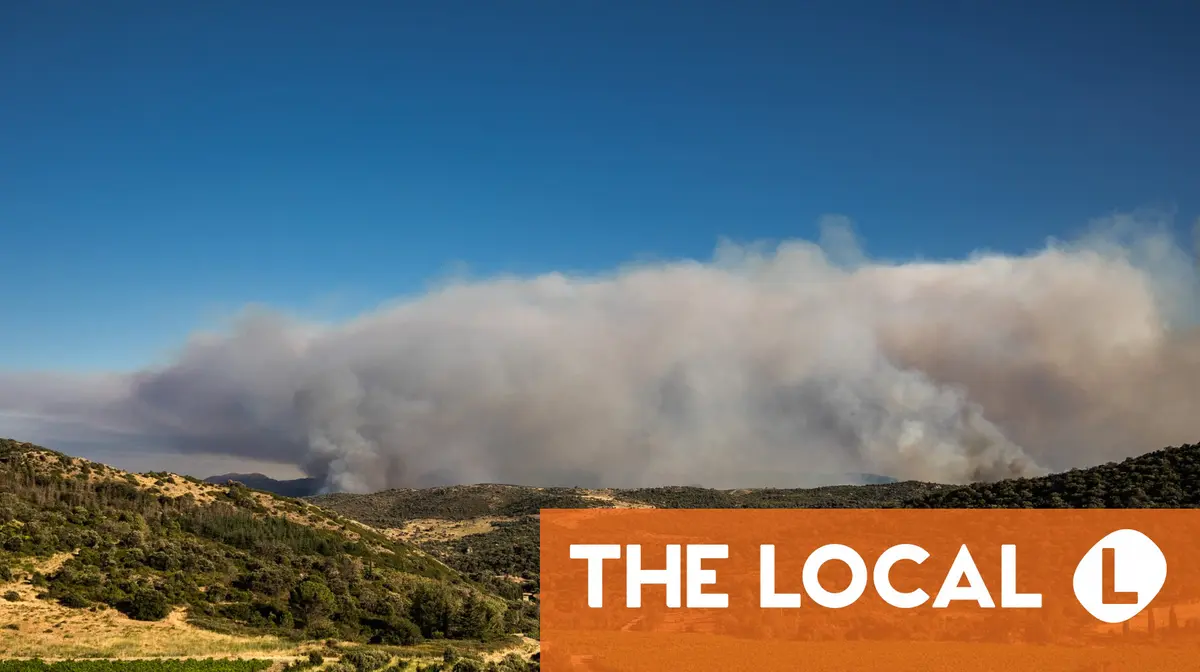
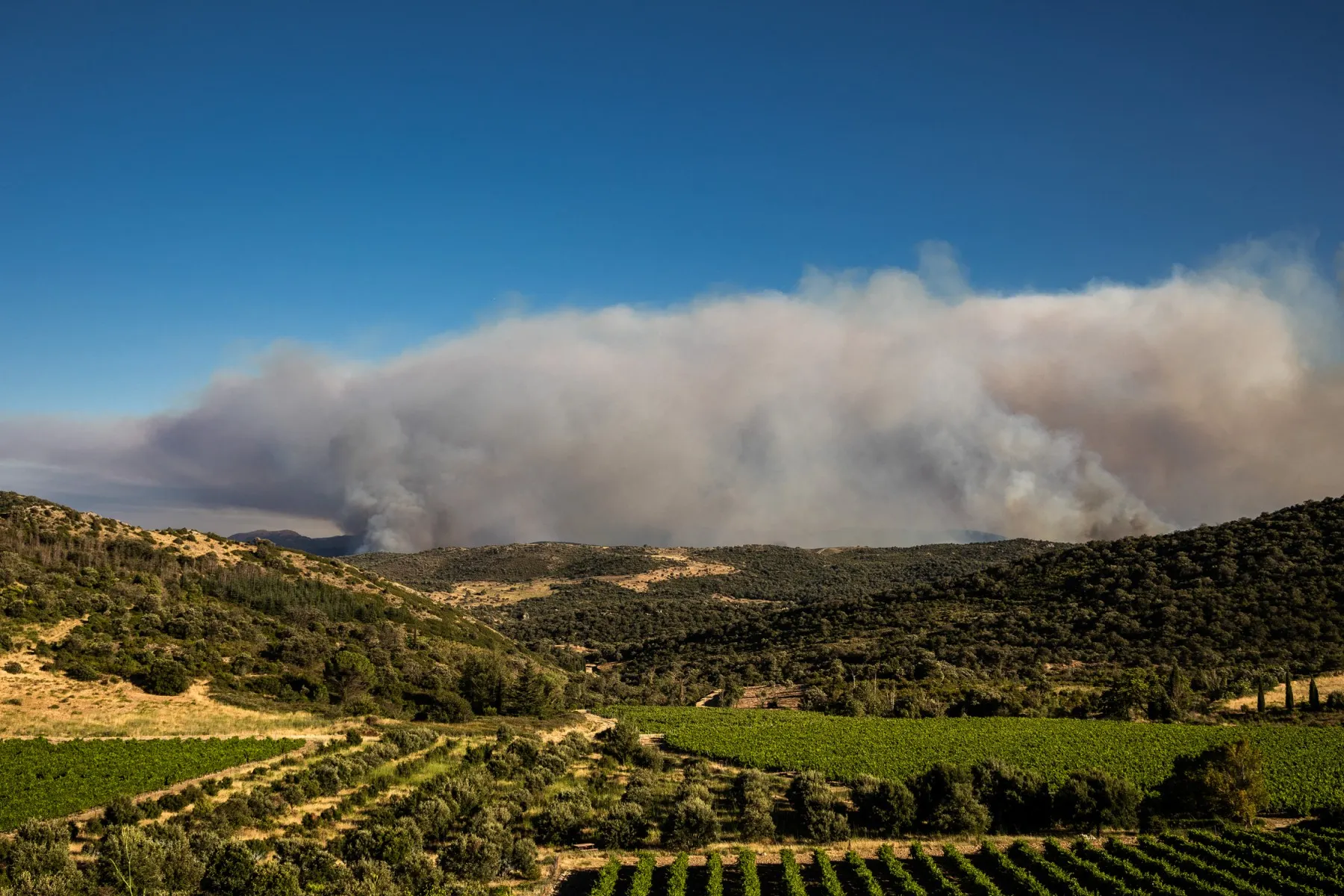
The huge wildfire in the Bordeaux area burned 42,000 hectares, but did not reach the area's famous vineyards. The smoke, however, was blown over a wide area and at one point almost a quarter of France reported poor air quality liked to smoke.
The most immediate concern is the health effects for the people living in the affected areas, but with vineyard owners preparing to harvest their grapes, there are also fears that the harvest will be tainted.
READ ALSO: What can you do to protect yourself from smoke during France's wildfires?
The bigger problem for French winemakers is the drought and successive heatwaves, which have stunted many crops and mean that the grape harvest is starting unusually early in many areas.
When it comes to smoke, the worst affected area is the left bank of the Garonne river - which in wine terms means the Médoc and Graves appellations. However, smoke has blown all over the south-west, albeit in less concentrated qualities.
Smoke can affect the taste of grapes and the effect is most pronounced the closer it gets to harvest time - in this case, most vineyards were about two to three weeks away from harvesting when the smoke arrived.
The taste effects, however, can be surprising.
Régis Falxa, president of the Fédération des vignerons indépendants de Gironde, told BFM TV that being tainted by smoke can give grapes a smokey taste, but it can also make them taste of ash, rubber and even - bizarrely - bacon.
The effects also vary between drinkers, a study by the Institut français de la vigne et du vin found that between 20 and 25 percent of drinkers do not taste the smokey or ashy flavour.
Nevertheless, the Institute said that: "These characteristics are considered a major defect because they are disagreeable and can stay in the mouth for a long time, affecting the after-taste of the wine."
Wildfires are nothing new in the wine-growing areas of southern France - although the wildfire season as a whole is getting longer and more intense, linked to climate change - so there have been several studies into the effects of wildfire smoke on wine.
In fact, the Bordeaux area suffered another major blaze in 2022 at La Teste de Buche, about 30km south of the site of the 2026 wildfires, and managed to save most of its wine harvest from the effects of the smoke.
Régis Falxa said that ultimately it is too early to tell, since "the flavour profiles of the wine are not verifiable until after the harvest".
However, he added: "We must exercise caution and avoid alarmism. We have the benefit of hindsight from the 2022 fires in Gironde and know how to respond.
"We also draw on the expertise of our colleagues in Occitanie, who are often faced with these challenges.”
The region of Occitanie - in the south of France encompassing the Spanish border and much of the Mediterranean coastline - has suffered its own mega-blazes including the 2025 fires at Corbières.
In response, the local winemakers federation has created the Viti-incendie portal - a web portal which allows any winemaker to access a map showing the extent of fire-affected areas to locate vulnerable plots, as well as a map detailing the risk of smoke taint, while a partnership with laboratories enables producers to access analyses at preferential rates.
“This is a first-of-its-kind tool in France and even beyond. Given the situation and the demand, we have made the fire impact map available to all winemakers in France, said Marie Corbel, technical director of Vignoble et vins du Languedoc-Roussillon.
"The idea is to address the risk well in advance to prevent wine contamination or costly treatments."
If the grapes of a certain vineyard are contaminated with an unpleasant taste, winemakers still have options - from the more basic, such as mixing grapes to dilute the taste, to the more complicated, such as activated carbon treatments to absorb problematic chemical compounds or the addition of proteins to eliminate phenol.
Perhaps a bigger problem is the effects of the heat and the drought, which in some areas have destroyed up to 30 percent of the grape harvest.