Germany to set up new drone security research unit, majority oppose plans to abolish early-retirement scheme, hundreds join Berlin’s first World Naked Bike Ride and more news on Monday, August 10th.
Monday's top story: Germany to set up new drone security research unit
Germany is planning to expand research into drone security following a succession of drone incidents, Interior Minister Alexander Dobrindt told Bild am Sonntag newspaper.
Dobrindt said a new drone security research unit would be set up on August 18th at a German Aerospace Centre (DLR) test airport in the eastern state of Saxony-Anhalt.
"The arms race in drone technology requires dedicated research units to keep pace," he said.
The centre will develop and test technologies to protect against drones and bring together researchers, technological innovation and the requirements of security authorities, the interior minister added.

The photo shows a German army vector drone. (Photo by DANIEL REINHARDT / AFP)
Dobrindt reportedly also plans to double staff at the Federal Police's anti-drone unit to 300, the paper said, citing government sources. The number of operational bases will also be doubled to eight locations nationwide.
On Saturday, drones were sighted above an army site in west Germany and early Wednesday, an explosives-laden drone was found near a Ukrainian cargo plane at Leipzig-Halle airport before being safely disarmed. Another cargo aircraft also collided mid-air with an unidentified object later that day.
READ ALSO: Germany holds security meeting over explosive drone amid Russia protest
Dobrindt described the incident as a possible "hybrid" attack by foreign powers. He said Germany was not at war but was a daily target of hybrid warfare, with espionage, sabotage, cyberattacks and covert operations aimed at destabilising the country or causing direct damage being a "constant reality".
German states lift Sunday lorry ban to ease low-water disruptions
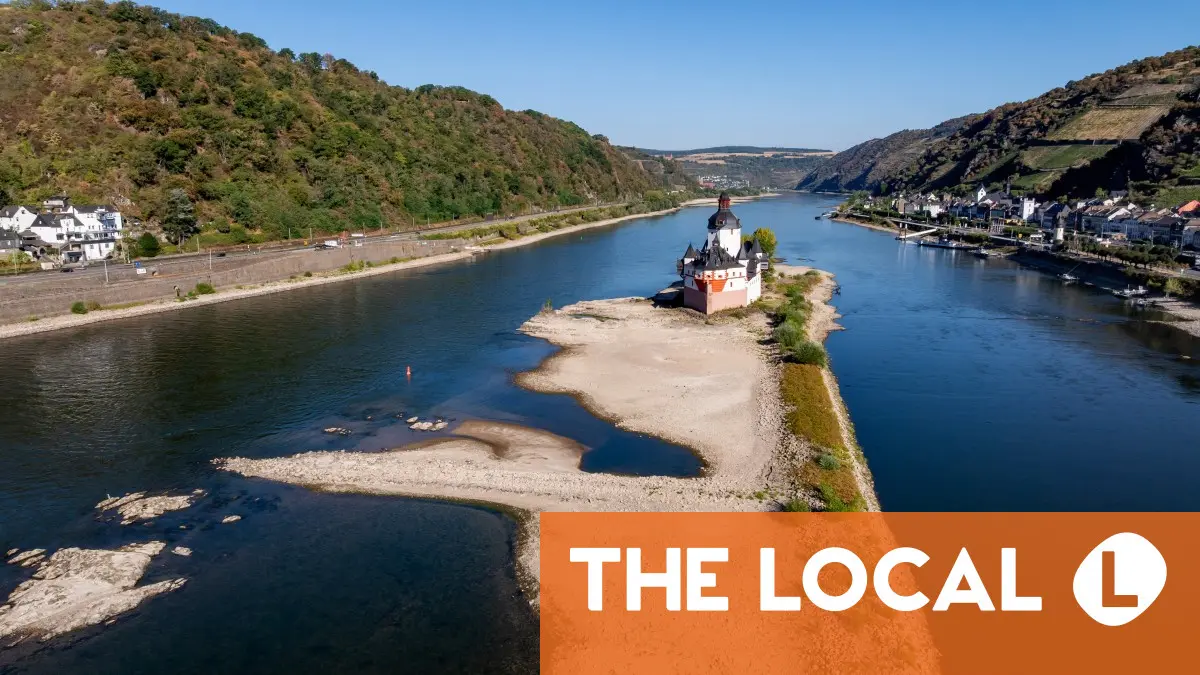
Several German states have temporarily suspended restrictions on Sunday and public holiday lorry traffic in an effort to reduce pressure on supply chains caused by persistently low water levels on major rivers.
The exemptions came into effect this weekend, with additional freight vehicles already visible on motorways in North Rhine-Westphalia on the first Sunday of the measure.
READ ALSO: MAPS - Where water scarcity is disrupting life in Germany
The move follows ongoing disruption to inland shipping, particularly on the Rhine, where many vessels are operating with significantly reduced cargo loads due to low water levels.
North Rhine-Westphalia’s Transport Minister Oliver Krischer said the temporary relaxation was intended to help maintain supply chains and prevent shortages by allowing more freight to be moved by road.
The measures were announced following talks between the federal government and industry representatives. Similar exemptions have been introduced in Lower Saxony, Rhineland-Palatinate and Saarland. The Verdi trade union criticised the policy, warning that it undermines workers’ legally protected Sundays and public holidays as periods of rest and recovery.
Majority oppose plans to abolish early-retirement scheme
A majority of people in Germany are against government plans to abolish the so-called 'retirement at 63' scheme, according to a survey conducted by polling institute Insa for Bild newspaper.
Sixty-eight percent of respondents said they were against the abolition of the option to retire without deductions after 45 years of insurance contributions, while only 24 percent supported it. Eight percent gave no response.
The results show that the early retirement scheme is relevant to many Germans, too: 56 percent said they intended to make use of it or had already done so, while 32 percent said no and 12 percent did not answer.

The current early-retirement scheme allows you to take a penalty-free pension from the age of 63 (for those born in 1952 or earlier) provided you have 45 years of insurance contributions. Photo by James Hose Jr on Unsplash
The plans to ditch the scheme are part of a 33-point reform package proposed by the government's pension commission in June. The scheme currently allows people to take a penalty-free pension from the age of 63 if they have 45 years of insurance contributions. This applies to people born in 1952 or earlier; for those born between 1953 and 1963, the age goes up by two months for each birth year.
READ ALSO: What Germany's planned pension reform means for you
People were also sceptical about plans to levy social security contributions on low-wage, part-time 'mini-jobs'. Sixty-one percent opposed this, 30 percent were in favour, and 9 percent did not express an opinion.
Overall, 77 percent of the 1,005 respondents surveyed by Insa said they were dissatisfied with the government's pension policy. Only 16 percent said they were satisfied.
Union representatives have called on the government to abandon its plan to phase out the scheme: "Fortunately, more and more state premiers are realising that the government's pension commission proposal... is wrong," Verdi chairman Frank Werneke told the paper.
Higher taxation planned for certain associations
Finance minister (SPD) Lars Klingbeil wants to significantly reduce tax-free allowances for certain associations and organisations, according to a report in Bild on Sunday.
Starting in 2027, an exemption limit of €1,000 will apply, rather than the current tax-free allowance of €5,000. This means that income up to €1,000 will be free of tax, but if profits exceed that amount, all income would become taxable, according to the draft bill from the finance ministry.
This change will affect various bodies, including associations pursuing commercial interests, such as professional sports clubs, and is expected to generate some €45 million in additional tax revenue.
The newspaper also reports that other tax concessions are to be scrapped, including the current €45,000 allowance for profits from the sale or closure of a business, and the tax-free allowance for gains from the sale of shares in corporations.
Criticism has already emerged from the Union parties. "Anyone wanting to lower tax-free allowances for associations is targeting the wrong area and hitting those who often lack financial reserves," said Alexander Hofmann, head of the CSU state group, on online platform X.
READ ALSO: How will Germany's income tax reforms affect you?
Sharp rise in new ADHD diagnoses in children
The number of new ADHD diagnoses among children and adolescents in Germany has risen significantly, according to a recent analysis by health insurance company DAK-Gesundheit.
Diagnoses of attention deficit and hyperactivity disorder in children up to the age of 17 rose 16 percent year on year in 2024 to 202,000 young people nationwide.
Boys received an initial diagnosis about twice as often as girls. Projections indicate that in 2024, this affected around 136,500 boys and 65,000 girls. At the same time, new diagnoses among girls rose by 21 percent within a single year – a much sharper increase than the 14 percent rise seen among boys. Compared to 2020, the figure for girls showed an increase of around 46 percent.
The rise affected all age groups but was particularly pronounced among schoolchildren aged ten to 14, where the number of cases grew by 22 percent. Overall, primary school-aged children are the most likely to receive an initial ADHD diagnosis; in 2024, the figure was nearly 24 out of every 1,000 children aged five to nine.
Hundreds join Berlin’s first World Naked Bike Ride
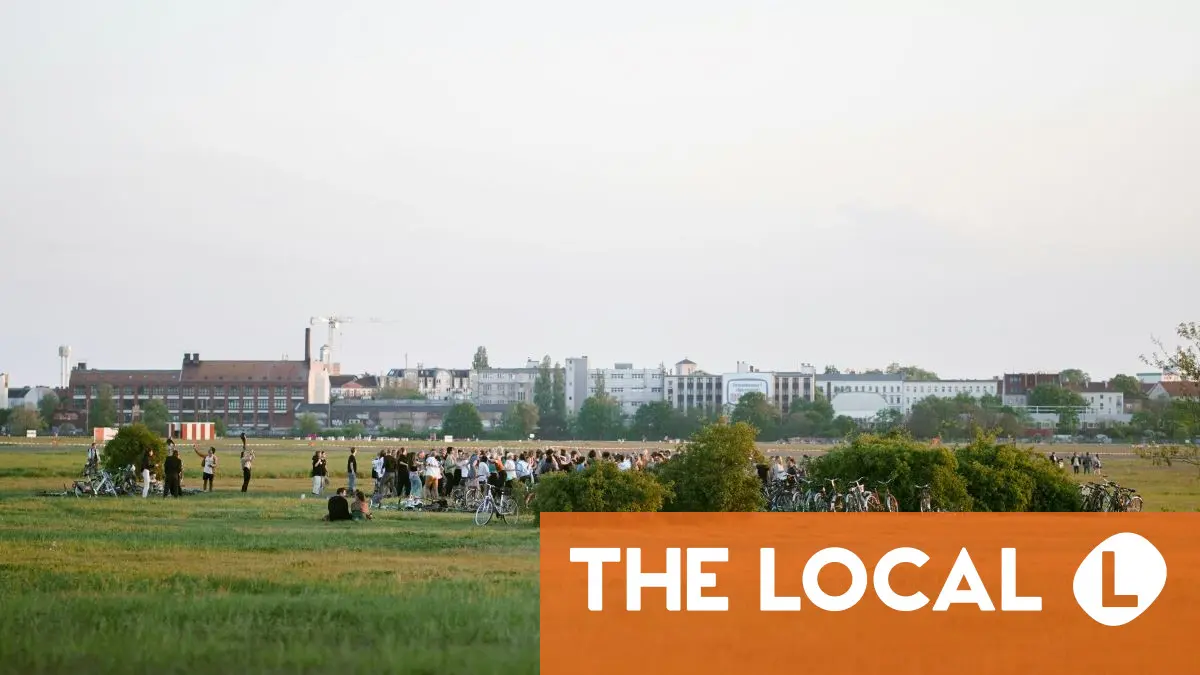
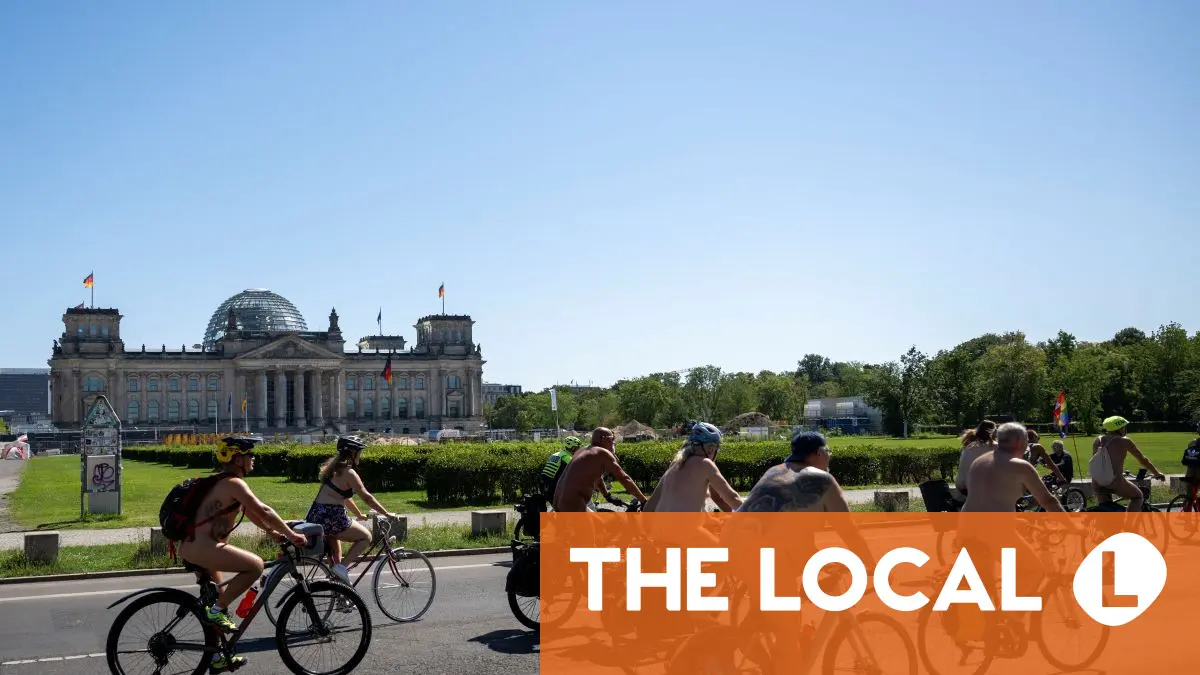
Hundreds of cyclists took part in Berlin’s first-ever World Naked Bike Ride on Sunday, turning heads as they rode through the capital with varying degrees of clothing, or none at all.
Police estimated attendance at around 500 people, with participants setting off from Mauerpark before heading towards the government district and following a route of more than 30 kilometres.
Organisers left decisions about clothing entirely to participants, with some riding fully naked while others opted for partial dress or body paint displaying campaign messages. Despite the unconventional appearance of the demonstration, many cyclists still chose to wear helmets.
The event was designed to promote values associated with the naturist movement, including tolerance, self-acceptance, inclusion and respect for body diversity. Organisers also highlighted environmental awareness and a connection with nature as key themes of the ride.
Beyond its social message, the demonstration served as an effort to raise the profile of Germany’s naturist community, which has experienced declining membership in recent years.
Supporters hope that the highly visible event will attract new interest in naturism and encourage broader discussion about body image, acceptance and personal freedom in public life.
READ ALSO: 'Comfortable in my own skin' - Foreigners react to public nudity in Germany
With reporting by AFP and DPA and Tom Pugh